How Warranty Exclusions Affect the Value of Products
A product warranty can provide valuable protection after a purchase, but the headline warranty period does not tell the whole story. What matters just as much is what the warranty does not cover.
Warranty exclusions can affect the practical value of a product by determining which repairs, failures, damage, and maintenance costs remain the customer's responsibility. Two products with similar prices and warranty periods may therefore provide very different levels of protection.
Understanding exclusions can help shoppers look beyond warranty length and evaluate the actual financial risk associated with owning a product.
What Are Warranty Exclusions?
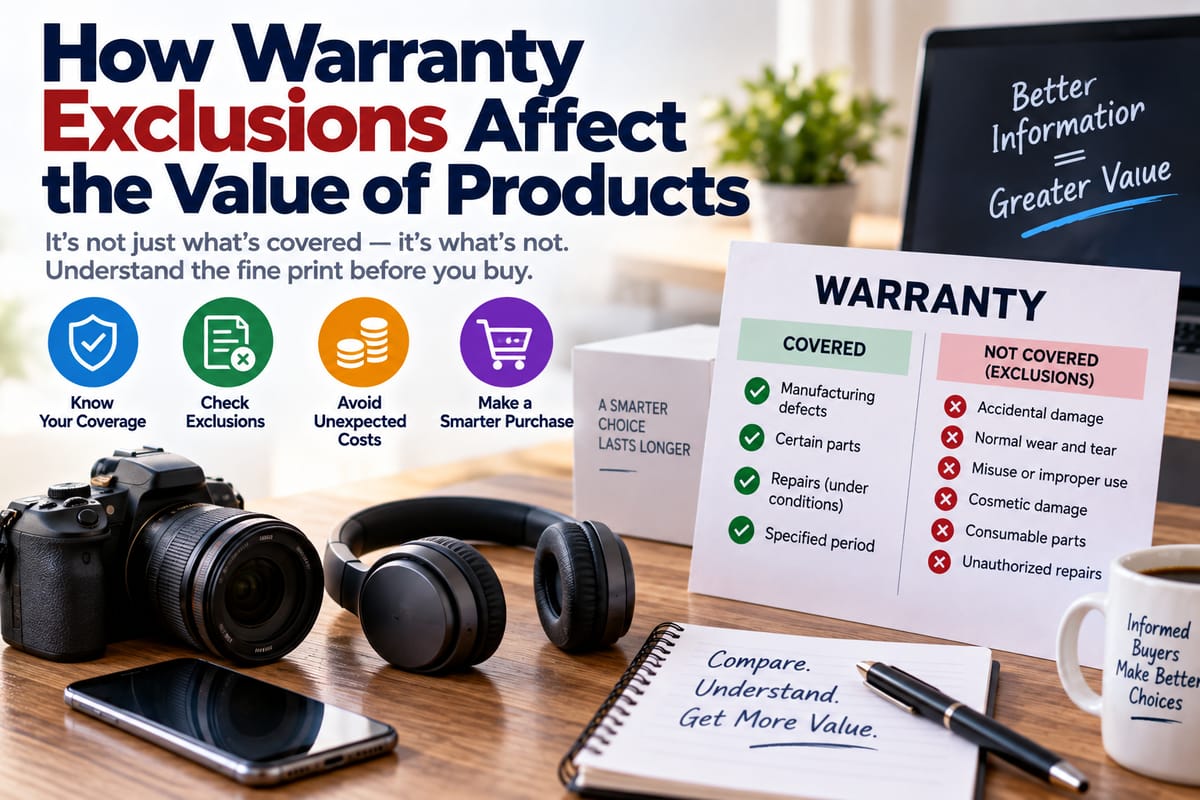
Warranty exclusions are conditions, situations, or types of damage that are specifically left outside the warranty's coverage.
Common exclusions can involve:
- Accidental damage
- Normal wear and tear
- Misuse
- Improper installation
- Unauthorized repairs
- Cosmetic damage
- Damage caused by external events
- Consumable components
- Certain accessories
- Lack of required maintenance
The exact exclusions depend on the manufacturer, product category, warranty type, and terms of the agreement.
A warranty described as "two years" does not necessarily mean that every problem occurring during those two years will be repaired or replaced at no cost.
Why Warranty Length Can Be Misleading
Warranty duration is one of the easiest features for consumers to compare.
A five-year warranty may initially appear more valuable than a one-year warranty. However, the length of coverage is only meaningful when the covered problems are clearly defined.
For example, a long warranty might cover manufacturing defects but exclude accidental damage, wear-related failures, or certain components that are likely to require replacement.
A shorter warranty with broader coverage could address a different set of risks.
Consumers should therefore consider coverage scope and exclusions alongside warranty duration.
How Warranty Exclusions Affect Product Value
Product value is not simply the difference between the purchase price and the product's features.
The potential cost of owning and maintaining the product also matters.
If a warranty excludes several expensive failure points, the buyer may face greater repair or replacement costs during ownership.
For example, imagine two appliances with similar purchase prices. One has a warranty that covers major components but excludes several costly parts. The other provides broader coverage for the same period.
The second product may offer a different level of financial protection even if its purchase price is slightly higher.
This is why warranty terms can be an important part of The Complete Guide to Choosing the Right Products.
Common Warranty Exclusions to Watch
Accidental Damage
Many standard warranties cover defects but exclude damage caused by accidents.
A cracked screen, dropped device, impact damage, or liquid spill may therefore fall outside a manufacturer's standard warranty.
Additional protection may be available for some products, but it should not be assumed.
Normal Wear and Tear
Products naturally deteriorate through regular use.
Examples can include:
- Worn batteries
- Deteriorated seals
- Worn upholstery
- Faded finishes
- Worn buttons
- Deteriorated moving parts
Manufacturers may consider these conditions normal wear rather than defects.
The distinction matters because a component can eventually fail simply because it has reached the end of its expected service life.
Misuse or Improper Use
Warranties commonly exclude damage resulting from using a product in ways that the manufacturer did not intend.
This might include exceeding weight limits, using incompatible accessories, exposing equipment to unsuitable conditions, or ignoring operating instructions.
The exact definition of misuse depends on the product and warranty terms.
Unauthorized Repairs
Some warranties exclude damage associated with unauthorized modifications or repairs.
A consumer who attempts to repair a product independently may therefore create complications if another problem develops later.
Before opening a product or replacing internal components, it is important to understand the manufacturer's warranty requirements.
Cosmetic Damage
Scratches, dents, discoloration, and other cosmetic problems may not be covered if they do not affect the product's operation.
This can matter particularly for expensive electronics, appliances, furniture, and other products where appearance contributes to perceived value.
Consumable Components
Certain components are designed to be replaced periodically.
Examples can include:
- Filters
- Batteries
- Printer cartridges
- Light sources
- Blades
- Belts
- Certain seals
A warranty may cover the product itself while excluding ordinary replacement of consumable components.
Electronics Often Have Complex Warranty Exclusions
Electronics can have particularly detailed warranty conditions because they contain numerous components and can be exposed to accidental damage, software issues, environmental conditions, and third-party accessories.
A laptop, smartphone, television, camera, or gaming device may have a warranty covering manufacturing defects while excluding physical damage or certain forms of liquid exposure.
How Electronics Warranties Actually Work provides additional context on the different types of warranty protection that can apply to electronic products.
The important point is that a warranty should be evaluated based on the actual terms rather than the headline coverage period.
Exclusions Can Increase the True Cost of Ownership
A product with extensive exclusions may carry more financial risk after purchase.
Suppose a product costs $500 and a commonly replaced component costs $150 to repair. If that component is excluded from the warranty, the customer may need to absorb the entire repair cost.
Over several years, multiple excluded repairs can significantly increase ownership expenses.
This is why consumers should consider warranty exclusions alongside maintenance, repairs, energy consumption, accessories, and other expenses.
The broader issue is covered in Product Ownership Costs: Complete Guide to True Cost.
Reliability and Warranty Coverage Are Related but Different
A strong warranty does not necessarily mean that a product is highly reliable.
Warranty coverage determines what happens when certain problems occur. Reliability concerns how consistently the product performs without experiencing failures in the first place.
A product could have extensive warranty protection but still require frequent service.
Another product could have a relatively limited warranty while experiencing few problems during normal ownership.
Consumers should therefore assess both factors separately.
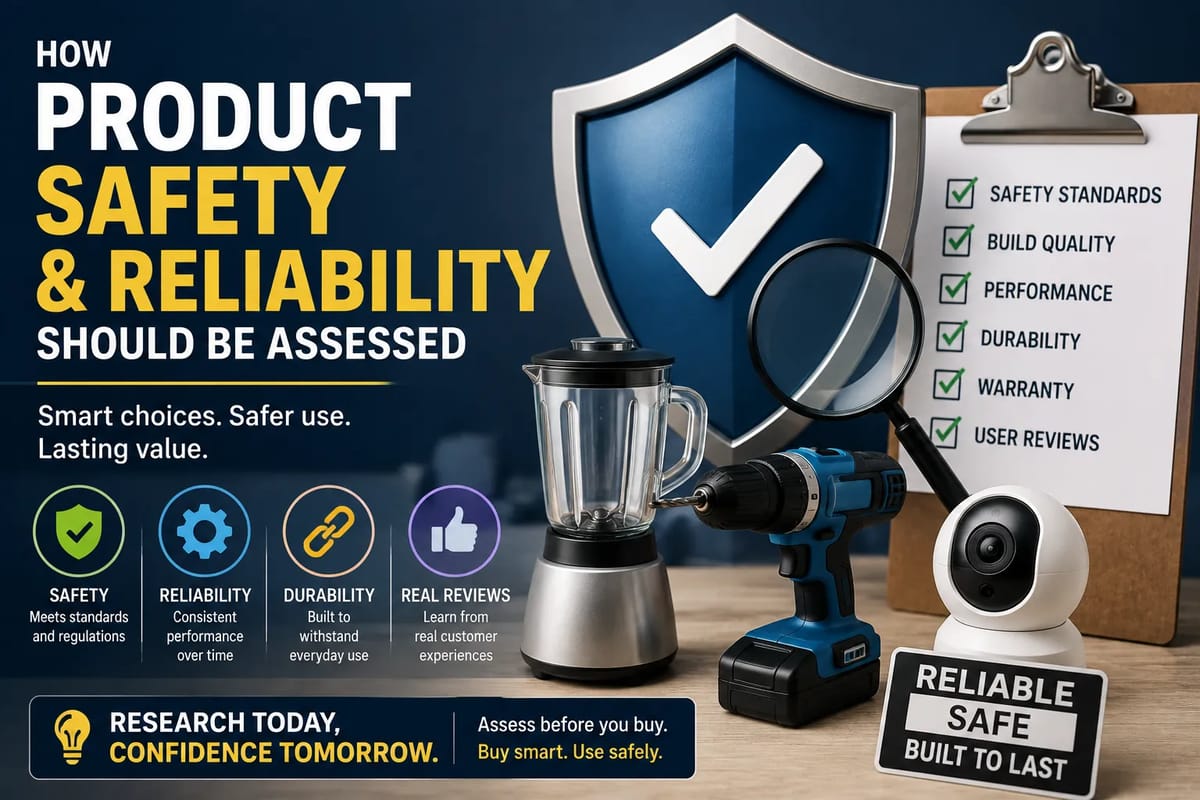
How Product Safety and Reliability Should Be Assessed provides a broader framework for evaluating product reliability and safety before making a purchase.
Warranty Exclusions and Repair Costs
The financial impact of an exclusion depends partly on how expensive the excluded repair is.
A warranty exclusion involving an inexpensive component may have little practical impact.
An exclusion involving a major electronic board, motor, compressor, battery, display, or other expensive component can be much more significant.
When comparing products, consumers can ask:
- What parts are most expensive to replace?
- How frequently do those components typically require service?
- Are they covered by the warranty?
- How long are replacement parts expected to remain available?
- Are labor costs covered?
- Are shipping or diagnostic fees charged?
These questions can reveal potential ownership costs that are not obvious from the product's purchase price.
Labor May Be Covered Differently From Parts
Warranty coverage does not always treat parts and labor identically.
A warranty might cover replacement parts while charging certain labor or service fees. Another agreement may cover both.
There may also be differences between repair performed by an authorized service center and work performed elsewhere.
Consumers should check whether the warranty specifies:
- Parts coverage
- Labor coverage
- Diagnostic charges
- Shipping costs
- Service fees
- On-site service
- Customer responsibility for transportation
These details can materially change the practical value of a warranty.
Shipping and Service Location Matter
A warranty may technically cover a repair while still requiring the customer to send the product to a designated service facility.
For large or heavy products, transportation can become expensive or inconvenient.
Some warranties provide on-site service, while others require customers to arrange shipping.
For international purchases, consumers should also determine whether warranty service is available in their country or region.
A warranty that is difficult or expensive to use may provide less practical value than its headline terms suggest.
Warranty Exclusions Can Affect Used Product Value
Warranty coverage can also influence the resale value of a product.
A transferable warranty may provide additional reassurance to a second owner, while a warranty that applies only to the original purchaser may not offer the same benefit.
Buyers of used products should ask:
- Is the original warranty still active?
- Is it transferable?
- What exclusions apply?
- Is proof of the original purchase required?
- Are repairs performed by authorized providers?
- Are replacement parts still available?
The answers can affect how much protection remains after the product changes hands.
Extended Warranties Do Not Automatically Solve Exclusions
Consumers sometimes purchase extended warranties assuming they will eliminate the risks associated with the original warranty.
That is not necessarily the case.
An extended plan may have its own exclusions, deductibles, claim limits, service requirements, and conditions.
Before purchasing additional coverage, compare the actual protection against the original warranty.
Pay particular attention to exclusions that remain unchanged throughout the coverage period.
Read the Exclusions Before the Benefits
Warranty documents often make coverage sound straightforward in promotional material.
The detailed terms may tell a different story.
When evaluating a warranty, consumers should read both the coverage section and the exclusions section.
Questions worth asking include:
- What failures are covered?
- What damage is excluded?
- Are batteries or other consumable components covered?
- Is accidental damage included?
- Are labor costs covered?
- Who pays shipping?
- Are there service fees?
- Can unauthorized repairs invalidate coverage?
- Is the warranty transferable?
- What happens after the warranty expires?
The answers provide a much clearer picture of the protection being purchased.
Compare Warranty Coverage With Expected Product Life
The useful value of a warranty also depends on how long the product is expected to remain in service.
If a product is designed to last many years but its warranty lasts only a short period, the customer may bear most repair risk during the later part of its expected life.
Conversely, a long warranty may provide meaningful protection if expensive components are covered throughout that period.
Warranty duration should therefore be considered alongside expected lifespan and maintenance requirements.
A Warranty Is Not a Substitute for Reliability
Consumers should avoid using warranty length as the only indicator of product quality.
A warranty primarily provides a remedy for certain covered problems. It does not prevent failures from happening.
Frequent breakdowns can still create inconvenience even when repairs are covered.
Customers may need to package and ship products, wait for parts, schedule service appointments, reinstall software, or temporarily go without the product.
Reliability can therefore have value beyond the direct financial protection offered by a warranty.
How to Compare Two Products With Different Warranties
When two products appear similar, create a simple comparison based on practical protection.
Consider:
| Factor | Product A | Product B |
|---|---|---|
| Warranty length | — | — |
| Accidental damage | — | — |
| Major components covered | — | — |
| Consumables covered | — | — |
| Labor covered | — | — |
| Shipping responsibility | — | — |
| Deductible or service fee | — | — |
| Transferable warranty | — | — |
| Expected ownership cost | — | — |
This approach prevents the warranty period from becoming the only point of comparison.
What Warranty Exclusions Mean for Buyers
Warranty exclusions do not necessarily make a product a poor purchase. Every warranty needs boundaries, and some exclusions reflect normal wear, misuse, or circumstances outside a manufacturer's reasonable control.
The important issue is whether the exclusions align with the risks that matter most for the particular product.
A warranty can provide meaningful protection when it covers expensive and realistic failure scenarios. At the same time, exclusions can leave consumers responsible for significant costs that are easy to overlook when comparing products.
For that reason, warranty evaluation should focus on what is covered, what is excluded, how long protection lasts, and what customers must pay themselves.
When these details are considered alongside purchase price, reliability, maintenance requirements, and expected lifespan, shoppers can develop a much clearer understanding of a product's true value over time.