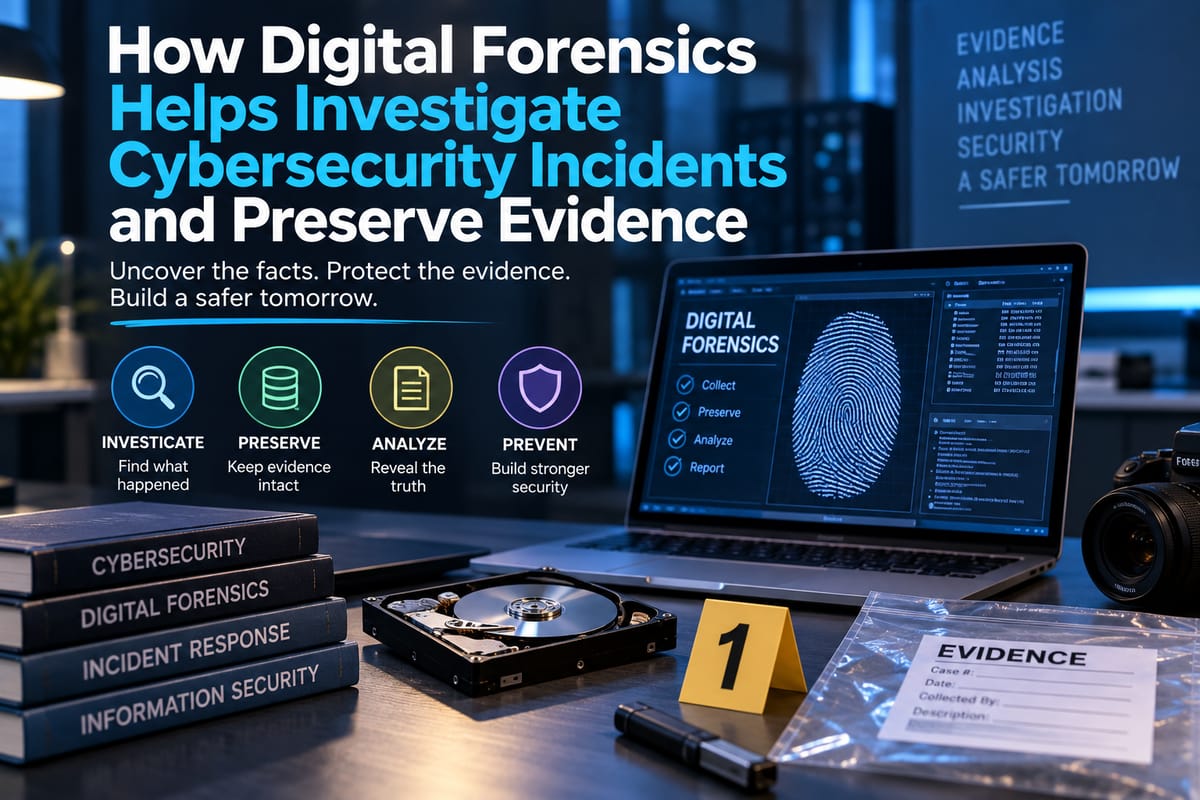
How Digital Forensics Helps Investigate Cybersecurity Incidents and Preserve Evidence
When a cybersecurity incident occurs, stopping the immediate threat is only part of the challenge. Organizations also need to determine what happened, how the attacker gained access, which systems were affected, what information may have been accessed, and whether additional threats remain.
Digital forensics plays an important role in answering those questions.
Digital forensic investigations involve the systematic identification, collection, preservation, examination, and analysis of digital evidence. Investigators may examine computers, mobile devices, servers, cloud environments, network records, applications, databases, and other sources of information to reconstruct events.
The process can help organizations understand an incident while preserving evidence that may be important for internal investigations, regulatory matters, legal proceedings, insurance claims, or future security improvements.
What Is Digital Forensics?
Digital forensics is the process of examining digital information in a structured manner to determine what happened and identify relevant evidence.
Unlike simply looking through files or checking a few security logs, forensic investigations are designed to preserve information and maintain a reliable record of how evidence was obtained and analyzed.
Depending on the incident, investigators may examine:
- Computers and laptops
- Smartphones and tablets
- Servers
- Network devices
- Cloud platforms
- Email systems
- Databases
- Application logs
- Authentication records
- Storage devices
- Security monitoring systems
- Browser activity
- System configuration files
The exact sources depend on the type of incident and the systems involved.
Why Digital Forensics Matters During a Cybersecurity Incident
A security alert may tell an organization that something suspicious happened, but it may not explain the complete story.
Forensic analysis can help answer questions such as:
- When did unauthorized activity begin?
- How did the attacker gain access?
- Which account or device was involved first?
- What systems were accessed?
- Were files copied or modified?
- Did the attacker create additional accounts?
- Was malware installed?
- Did the attacker attempt to hide activity?
- What evidence remains available?
- Has the attacker been completely removed?
These answers can influence containment, recovery, notification decisions, and long-term security improvements.
Organizations can place this work within a broader security strategy by using resources such as The Ultimate Guide to Business Cybersecurity, which provides broader context on protecting business systems and information.
Digital Forensics and Incident Response Work Together
Digital forensics and incident response are closely connected, but they are not identical.
Incident response focuses on managing the cybersecurity event. It can include detecting the incident, containing the threat, eliminating malicious activity, recovering systems, and learning from what happened.
Digital forensics focuses more heavily on evidence and reconstruction.
During a major incident, the two disciplines often operate together.
For example:
- Security monitoring detects suspicious activity.
- Incident responders investigate and contain the threat.
- Forensic specialists collect relevant evidence.
- Investigators analyze systems and activity records.
- The organization determines the scope and cause of the incident.
- Response teams use the findings to guide recovery.
- The organization applies lessons learned to improve security.
How Incident Response Handles Cybersecurity Events provides additional context on the broader incident-response process.
The Importance of Preserving Digital Evidence
Digital evidence can be fragile.
Files can be changed. Logs can be overwritten. Devices can be shut down. Remote systems can change. Attackers may deliberately attempt to remove traces of their activity.
For this reason, investigators need to consider evidence preservation from the beginning of an investigation.
Important evidence may include:
- File timestamps
- Authentication records
- System logs
- Network traffic records
- Email records
- Malware samples
- Browser artifacts
- Memory contents
- Application logs
- Configuration changes
- Cloud activity records
Preserving the original evidence helps investigators analyze a reliable representation of what was available at the relevant time.
What Is a Chain of Custody?
A chain of custody is a documented record showing how evidence was collected, handled, transferred, stored, and analyzed.
It can become particularly important when digital evidence may later be used in legal or regulatory proceedings.
A chain-of-custody record may document:
- Who collected the evidence
- When it was collected
- Where it was collected
- How it was acquired
- How it was stored
- Who accessed it afterward
- When it was transferred
- What analysis was performed
The specific requirements can vary depending on the organization, jurisdiction, investigation, and intended use of the evidence.
The broader principle is straightforward: investigators should be able to explain where evidence came from and how it was handled.
Creating Forensic Copies of Evidence
Investigators may create forensic images or other controlled copies of storage media so that analysis can be performed without unnecessarily altering the original source.
A forensic image can provide a representation of the contents of a device or storage medium at a particular point in time.
Investigators can then work with the copy while preserving the original evidence.
Depending on the circumstances, forensic acquisition may involve:
- Hard drives
- Solid-state drives
- Removable storage
- Mobile devices
- Virtual machines
- Cloud resources
The acquisition method should be appropriate for the technology being investigated.
File Metadata Can Reveal Important Information
Files contain more information than their visible contents.
Metadata may provide clues about:
- Creation times
- Modification times
- Access activity
- File ownership
- File types
- Software used
- Location-related information in some circumstances
- User accounts associated with activity
Metadata does not automatically prove who performed an action, because timestamps and other attributes can sometimes be altered.
However, when combined with other evidence, metadata can help investigators construct a timeline.
Building a Timeline of the Attack
One of the central goals of digital forensics is reconstructing a sequence of events.
A timeline may show:
- An account was created.
- A suspicious login occurred.
- A privilege was changed.
- Malware executed.
- A connection was established with an external system.
- Files were accessed.
- Data was transferred.
- Additional systems were accessed.
- Security controls were modified.
No single record necessarily provides the entire story.
Investigators often correlate information from multiple sources to develop a more complete timeline.
Examining System Logs
Logs can provide valuable evidence about activity within an environment.
Depending on the system, logs may record:
- User logins
- Failed authentication attempts
- Process execution
- File activity
- Network connections
- Administrative changes
- Application events
- Security alerts
- Configuration changes
The usefulness of logs depends heavily on whether they were enabled, retained for long enough, protected from unauthorized modification, and collected in a way that allows investigators to analyze them.
This is one reason organizations should design logging and monitoring capabilities before an incident occurs.
Investigating Network Activity
Cybersecurity incidents frequently involve network communication.
An attacker may communicate with external infrastructure, move between internal systems, download tools, transfer information, or establish persistent connections.
Forensic investigators may examine:
- Firewall logs
- DNS records
- Proxy logs
- Network flow information
- VPN records
- Remote-access logs
- Intrusion detection alerts
- Cloud network records
Network evidence can help identify communication patterns and determine whether activity extended beyond the system where the incident was first discovered.
Examining Memory
In some investigations, volatile memory can contain information that may not be available on a storage device.
Memory analysis can potentially reveal:
- Running processes
- Network connections
- Loaded modules
- Encryption keys
- Malware-related information
- User activity
- Other temporary data
Because volatile memory can disappear when a system is shut down or loses power, investigators may need to consider memory acquisition early in certain investigations.
The appropriate approach depends on the incident and the system involved.
Cloud Forensics Creates Additional Challenges
Modern organizations increasingly rely on cloud services, which can make forensic investigations more complex.
Data may be distributed across:
- Cloud applications
- Virtual machines
- Storage services
- Identity platforms
- SaaS applications
- Multiple geographic regions
- Third-party infrastructure
Organizations may not have direct physical access to the underlying hardware.
Instead, investigators may rely on provider-generated logs, account activity records, application records, snapshots, audit trails, and other available evidence.
Cloud forensic readiness therefore needs to be considered when organizations design their broader security programs.
Mobile Devices Can Become Important Evidence
Smartphones and tablets may contain information relevant to an investigation.
Depending on the circumstances, investigators may examine:
- Messages
- Application activity
- Authentication information
- Browser records
- Files
- Location-related information
- Device configuration
- Connection history
Accessing mobile-device evidence can involve technical, legal, and privacy considerations, particularly when a device contains personal information unrelated to the incident.
Malware Analysis and Digital Forensics
When malicious software is discovered, forensic investigators may examine it to understand its behavior and role in the incident.
Analysis can help determine:
- How the malware entered the environment
- What files it modified
- What processes it created
- What systems it communicated with
- Whether it attempted to maintain persistence
- What information it may have accessed
- Whether similar artifacts exist elsewhere
Malware analysis can therefore contribute to both investigation and containment.
Digital Forensics Can Reveal the Initial Access Method
Determining how an attacker entered an environment is one of the most important questions in an investigation.
Possible initial access methods can include:
- Stolen credentials
- Phishing
- Exploited vulnerabilities
- Malicious attachments
- Compromised third-party services
- Exposed remote-access systems
- Misconfigured cloud resources
- Infected software
Finding the initial access route can help an organization close the same security gap before another attacker exploits it.
Evidence Can Reveal Lateral Movement
Attackers do not necessarily remain on the first system they compromise.
They may attempt to move through the environment to reach more valuable systems or accounts.
Investigators may look for evidence of:
- Remote logins
- Credential reuse
- Administrative activity
- Unusual network connections
- File-sharing activity
- Remote execution
- Privilege changes
- Access to additional servers
Identifying lateral movement can significantly change the perceived scope of an incident.
Digital Forensics Helps Determine Data Exposure
An organization may know that an attacker accessed a system without knowing whether sensitive information was actually viewed or copied.
Forensic evidence can sometimes help determine:
- Which files were accessed
- Which databases were queried
- Whether data was compressed
- Whether files were copied
- Whether unusual outbound transfers occurred
- Which accounts accessed sensitive resources
The available evidence may not always provide a definitive answer, but it can help organizations make better-informed assessments.
Common Forensic Challenges
Digital investigations can be difficult because attackers may actively attempt to hide their activity.
Challenges can include:
- Deleted files
- Missing logs
- Altered timestamps
- Encrypted data
- Insufficient data retention
- Incomplete monitoring
- Cloud complexity
- Multiple affected systems
- Large volumes of data
- Previously compromised evidence
Organizations can reduce some of these difficulties by preparing forensic capabilities before an incident happens.
Common Mistakes That Can Damage an Investigation
An organization's response actions can unintentionally destroy or alter useful evidence.
Examples include:
- Immediately wiping a compromised device
- Reinstalling an operating system before collecting evidence
- Shutting down systems without considering volatile evidence
- Allowing many people to access affected systems
- Failing to record important timestamps
- Modifying logs without preserving originals
- Communicating unverified conclusions
- Failing to document investigative decisions
These issues can make it harder to reconstruct what happened.
Organizations can explore Common Mistakes Organizations Make When Responding to Cybersecurity Incidents for a broader discussion of response problems that can complicate incident investigations.
Preparing for Digital Forensics Before an Incident
Forensic readiness should begin before an organization experiences a serious security event.
Useful preparation can include:
- Defining logging requirements
- Establishing appropriate data-retention periods
- Protecting security logs from unauthorized modification
- Documenting critical systems
- Maintaining accurate system clocks
- Establishing evidence-handling procedures
- Identifying forensic specialists
- Creating incident-response procedures
- Conducting response exercises
- Understanding cloud-provider logging capabilities
Preparation can dramatically reduce the amount of uncertainty investigators face during an incident.
How Cybersecurity Programs Support Forensic Investigations
Digital forensics is easier when an organization already has visibility into its environment.
A mature cybersecurity program may provide:
- Centralized logging
- Endpoint monitoring
- Network visibility
- Identity monitoring
- Vulnerability management
- Access controls
- Security alerting
- Backup systems
- Asset inventories
- Documented response procedures
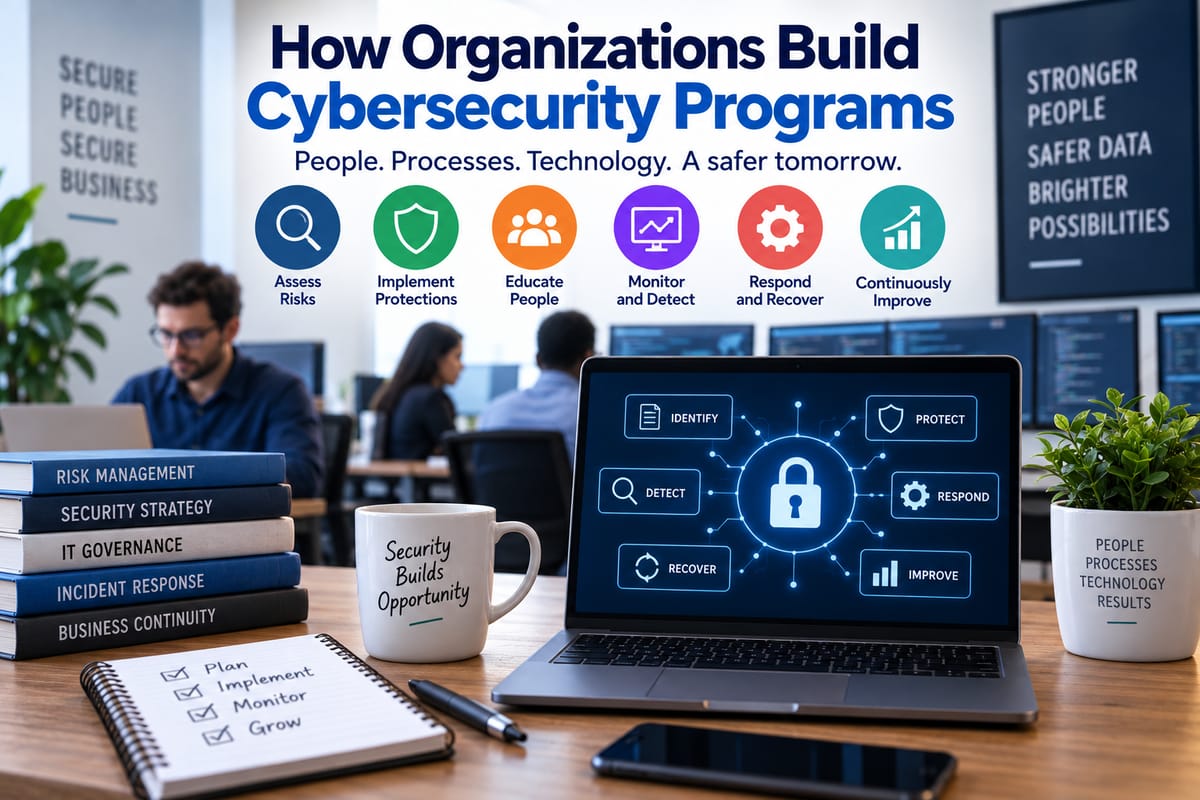
How Organizations Build Cybersecurity Programs provides a broader perspective on establishing the policies, processes, people, and technologies that support organizational cybersecurity.
Forensic capability should therefore be viewed as part of the wider security ecosystem rather than a completely separate activity.
The Role of Documentation
Good documentation can be as important as technical analysis.
Investigators should maintain records of:
- What was discovered
- When it was discovered
- Who performed each action
- What evidence was collected
- Which systems were examined
- What tools were used
- What findings were identified
- Which conclusions remain uncertain
Clear documentation helps separate confirmed facts from assumptions.
It can also make it easier for another investigator to understand the work performed.
Turning Forensic Findings Into Security Improvements
A forensic investigation should not necessarily end when the immediate incident is resolved.
The findings can reveal weaknesses that need to be addressed.
For example, an investigation might identify:
- An unpatched application
- Excessive privileges
- Weak authentication
- Poor network segmentation
- Inadequate logging
- Insufficient monitoring
- Poorly protected credentials
- Unsecured remote access
These findings can feed into vulnerability management, security architecture, employee training, access-control improvements, and other security initiatives.
The investigation therefore becomes a source of information for strengthening the organization against future incidents.
Building a Stronger Evidence-Ready Security Environment
Digital forensics gives organizations a structured way to investigate cybersecurity incidents, reconstruct events, and preserve information that may be important long after the immediate threat has been contained.
Its effectiveness depends heavily on preparation. Logs must exist, evidence must be preserved, systems must be documented, and investigators must know how to collect and analyze information without unnecessarily altering it.
A strong forensic capability is therefore not simply about purchasing specialized investigative tools. It is about building an environment where important evidence can be identified, protected, and understood when something goes wrong.
When digital forensics is integrated with incident response and a broader cybersecurity program, organizations gain a clearer view of what happened, how far an incident reached, and which weaknesses need to be addressed. That combination can turn a confusing security event into a structured investigation that supports recovery and stronger protection going forward.