**What Is Data Privacy and Why Matters?
Every time people use a website, download an app, make an online purchase, send a message, or connect to a digital service, they create data. Some of that information may seem harmless, such as a browsing preference or shopping history. Other information, including financial details, identification numbers, location information, and private communications, can be highly sensitive.
This is where data privacy becomes important.
Data privacy is the principle that people should have an appropriate level of control over information collected about them, including how it is gathered, used, stored, shared, and deleted. It is not simply about keeping information secret. It is also about transparency, choice, responsible data handling, and ensuring that personal information is used for legitimate purposes.
As more aspects of everyday life move online, understanding data privacy has become an essential part of being a responsible digital citizen.
What Does Data Privacy Mean?
Data privacy refers to the proper handling of personal information throughout its lifecycle.
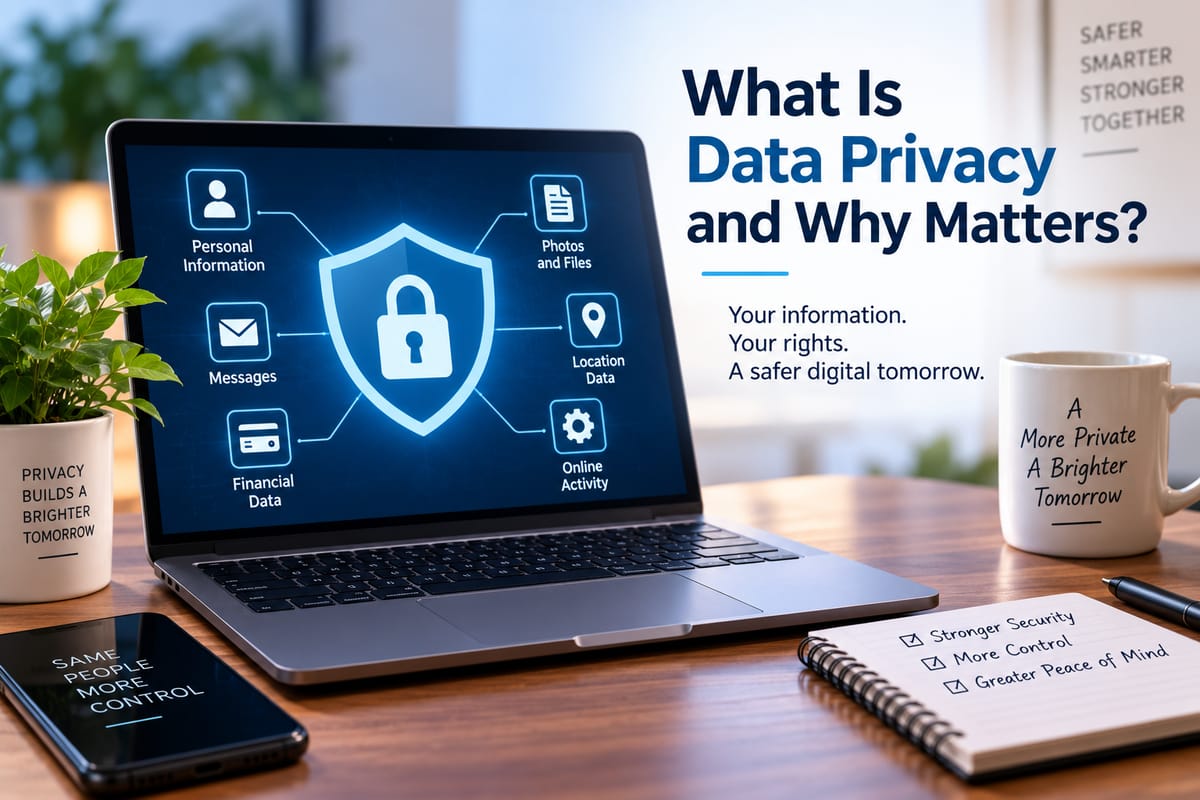
Personal data can include information that directly identifies someone, such as a name or email address. It can also include information that can be combined with other data to identify or profile an individual.
Examples include:
- Names and contact details
- Identification numbers
- Financial information
- Online account information
- Location data
- Browsing activity
- Search history
- Device information
- Photographs and videos
- Health-related information
- Employment information
- Purchase histories
- Communications and messages
Data privacy concerns what happens to this information after it is collected.
A company may need certain information to provide a service, for example, but that does not automatically mean it should collect every piece of information available. Responsible privacy practices involve collecting appropriate information, explaining why it is needed, protecting it, and limiting unnecessary use or disclosure.
Data Privacy and Data Security Are Not the Same
Data privacy and data security are closely related, but they describe different concepts.
Data privacy focuses on how personal information is collected, used, shared, retained, and controlled.
Data security focuses on protecting information from unauthorized access, alteration, loss, theft, or destruction.
For example, an organization might have strong cybersecurity systems that prevent hackers from accessing a database. That addresses data security. However, if the organization collects excessive information or uses customer data for purposes that were not properly disclosed, privacy concerns can still exist.
Understanding what data security means and how digital information can be protected helps explain the technical safeguards that support responsible data handling.
In practice, good privacy requires both appropriate policies and effective security measures.
Why Data Privacy Matters
Data can reveal a great deal about a person.
A single piece of information may appear insignificant, but multiple data points can create a detailed picture of someone's habits, interests, relationships, movements, preferences, and behavior.
For example, a collection of location records could reveal where someone regularly works, shops, travels, or spends time. Browsing and purchasing histories can provide insight into interests and habits. Account information can potentially expose financial or personal details.
The more information organizations collect, the greater the potential consequences of misuse, unauthorized access, or inappropriate sharing.
Data privacy helps establish boundaries around this information.
How Personal Data Is Collected
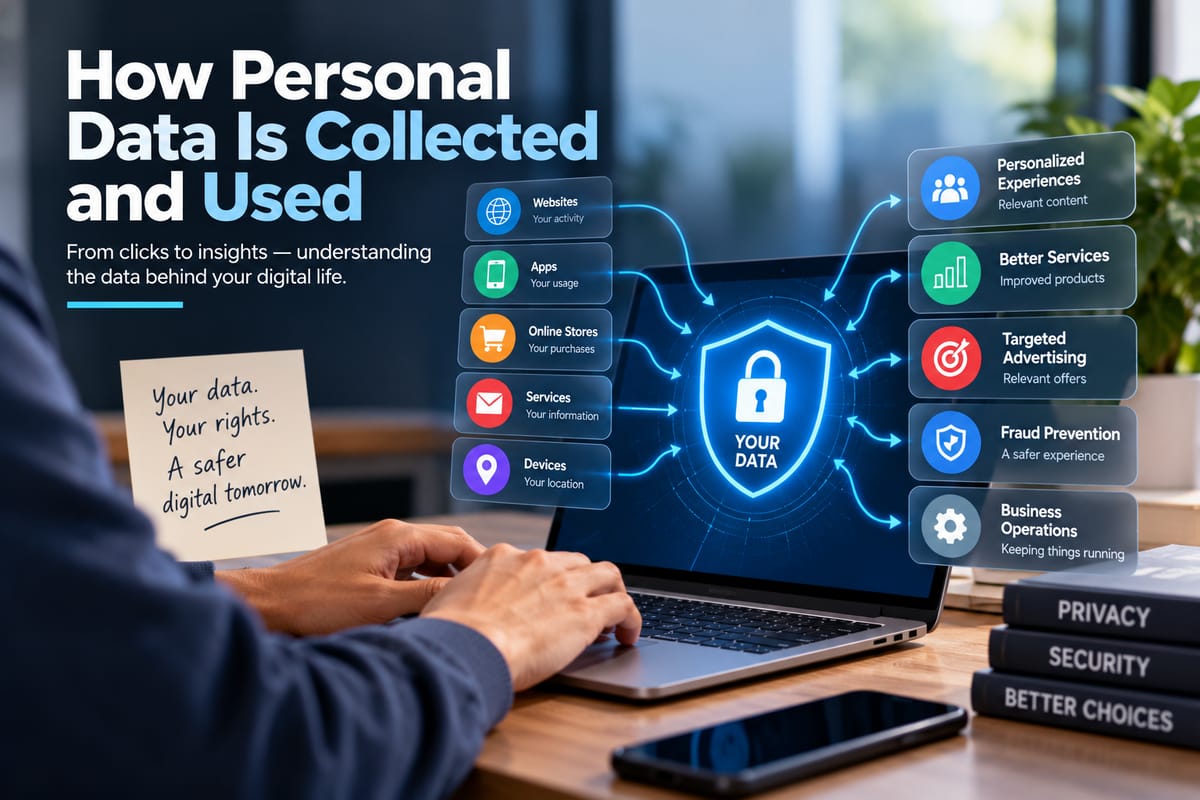
People often provide personal information intentionally.
When creating an account, for example, a service may request a name, email address, phone number, or payment information. Online stores may collect shipping and purchasing information to process orders.
However, data can also be collected indirectly.
Websites and applications may gather information about devices, interactions, approximate location, browsing behavior, or usage patterns. Cookies and similar technologies can help websites remember preferences or understand how visitors interact with their services.
Mobile devices can also generate significant amounts of information through applications, sensors, connectivity features, and location services.
The collection itself is not necessarily inappropriate. The important questions are what is collected, why it is collected, how long it is retained, and who can access it.
The Importance of Transparency
People should be able to understand what happens to their personal information.
Privacy notices and policies are intended to explain how organizations collect and use data. However, these documents can sometimes be long and difficult for ordinary users to understand.
Meaningful transparency should make important information reasonably clear, including:
- What types of information are collected
- Why the information is needed
- How it will be used
- Whether it is shared with other organizations
- How long it may be retained
- What choices users have
- How users can exercise applicable privacy rights
Clear explanations make it easier for people to make informed decisions about the services they use.
Data Privacy and Online Accounts
Online accounts often contain a mixture of personal and sensitive information.
An email account might contain private conversations, documents, receipts, travel information, and account recovery messages. A shopping account could contain addresses, purchase histories, and payment details. Social platforms can contain photographs, relationships, interests, and personal conversations.
Protecting these accounts is therefore an important part of maintaining privacy.
People can improve their privacy by using strong, unique passwords, enabling multi-factor authentication where available, reviewing account permissions, and being cautious about suspicious messages or requests for information.
For broader practical advice, an Online Privacy Guide can help explain ways people can reduce unnecessary exposure while using digital services.
The Role of Consent
Consent is an important concept in data privacy, although privacy requirements and legal definitions vary depending on the jurisdiction and situation.
In general, people should have meaningful information about what they are agreeing to when an organization requests permission to collect or use their data.
Consent can become problematic when users are presented with confusing choices, buried information, or interfaces designed to encourage acceptance without understanding the consequences.
Good privacy practices aim to make important choices understandable rather than hiding them behind complicated processes.
Data Sharing With Third Parties
Personal information may sometimes be shared with other organizations.
For example, a company may use external providers for payment processing, cloud hosting, analytics, customer support, advertising, or other business functions.
Third-party sharing does not automatically mean that privacy has been violated. The important issue is whether the sharing is appropriate, transparent, properly governed, and consistent with applicable requirements and the purposes for which the information was collected.
Consumers should pay attention to the privacy practices of services they use, particularly when an application requests access to information that appears unrelated to its primary function.
Data Privacy and Identity Theft
Poor protection of personal information can contribute to identity-related risks.
Criminals may attempt to obtain information such as account credentials, identification details, financial information, or other personal data and use it for fraudulent purposes.
Identity theft is one reason privacy and security should be treated as connected issues. Reducing unnecessary exposure of personal information can make it more difficult for criminals to assemble useful information about a target.
People concerned about this risk can learn more from an Identity Theft Protection Guide, which explores practical ways to protect personal information and accounts.
How Companies Can Protect Data Privacy
Organizations have an important responsibility because they often control large quantities of customer, employee, and business information.
Good privacy practices can include:
- Collecting only information that is reasonably necessary
- Clearly explaining data practices
- Limiting access to sensitive information
- Encrypting appropriate data
- Using strong authentication controls
- Regularly reviewing data retention practices
- Securely deleting information that is no longer needed
- Training employees on privacy and security
- Assessing third-party data practices
- Responding appropriately to privacy incidents
Privacy should not be treated as a one-time project. Data practices, technologies, regulations, and business operations can change over time, requiring organizations to continually review their approach.
Why Data Minimization Matters
One of the simplest privacy principles is data minimization.
The basic idea is straightforward: organizations should avoid collecting or retaining more personal information than they reasonably need for a legitimate purpose.
Data minimization can reduce unnecessary exposure. If information is never collected, it cannot later be lost from a database, accidentally disclosed, or accessed by an unauthorized person.
For individuals, the same principle can be useful. People do not necessarily need to provide every piece of personal information requested by an online service, particularly when the information is optional and unrelated to the service being provided.
Protecting Privacy on Social Media
Social media can create particularly complicated privacy challenges because users voluntarily share information while platforms may also collect information about how their services are used.
Before posting something publicly, users should consider how the information could be interpreted or reused later.
Privacy settings can also help limit who can see certain content. However, privacy settings should not be treated as a guarantee that information will remain completely private.
A useful approach is to share thoughtfully, review permissions periodically, and avoid posting sensitive information unnecessarily.
Children and Data Privacy
Children may be less aware of the long-term consequences of sharing personal information online.
Photos, usernames, school information, locations, interests, and conversations can all contribute to a child's digital footprint.
Parents, guardians, educators, and technology providers therefore have an important role in helping younger users understand privacy. Children can benefit from learning simple principles such as not sharing passwords, being cautious about strangers, asking before providing sensitive information, and understanding that something posted online may be difficult to completely remove.
Data Privacy in the Workplace
Data privacy also matters in professional environments.
Employers may handle information about employees, customers, suppliers, and business partners. Documents can contain contact details, financial records, identification information, contracts, and other sensitive material.
Employees can support privacy by following organizational policies, using approved systems, protecting credentials, avoiding unnecessary data downloads, and reporting suspected security incidents.
Privacy-conscious workplace practices can reduce the risk of accidental disclosure while strengthening trust between organizations and the people whose information they handle.
The Growing Importance of Digital Privacy
The distinction between online and offline life continues to become less clear.
Smartphones, connected appliances, wearable devices, vehicles, home systems, websites, applications, and digital services can all generate or process information.
As technology becomes more integrated into everyday activities, understanding what digital privacy means and why it matters becomes increasingly important.
The objective is not to avoid technology altogether. Digital services provide enormous convenience and value. Instead, privacy awareness helps people understand the trade-offs involved and make more informed decisions about what information they share.
Simple Ways to Improve Personal Data Privacy
Individuals can take several practical steps to strengthen their privacy.
Review App Permissions
Check which applications have access to your camera, microphone, contacts, files, location, and other device features. Remove permissions that are unnecessary for the application's intended function.
Use Strong Authentication
Use unique passwords for important accounts and enable multi-factor authentication whenever it is available.
Limit Unnecessary Information Sharing
Think carefully before providing personal details to websites, applications, forms, and unfamiliar services.
Check Privacy Settings
Review privacy and account settings periodically, particularly after major application updates.
Be Careful With Public Wi-Fi
Avoid accessing highly sensitive accounts on unsecured networks when appropriate, and use trusted connections and security protections.
Keep Software Updated
Operating system and application updates frequently include security improvements. Keeping devices updated can reduce exposure to known vulnerabilities.
Be Alert to Phishing
Unexpected messages requesting passwords, payment information, verification codes, or other sensitive details deserve careful scrutiny.
Privacy Is About More Than Keeping Secrets
Data privacy is ultimately about responsible control over personal information.
People should be able to understand what information is being collected about them, why it is being used, how it is protected, and when it may be shared. Organizations, meanwhile, need systems and policies that treat personal information as something that requires careful stewardship.
As digital technology becomes increasingly embedded in everyday life, privacy awareness will become less of a specialist concern and more of a basic digital skill. Understanding how personal information moves through the online world gives people greater ability to make informed choices, protect their accounts, and decide how much of their lives they want to share.