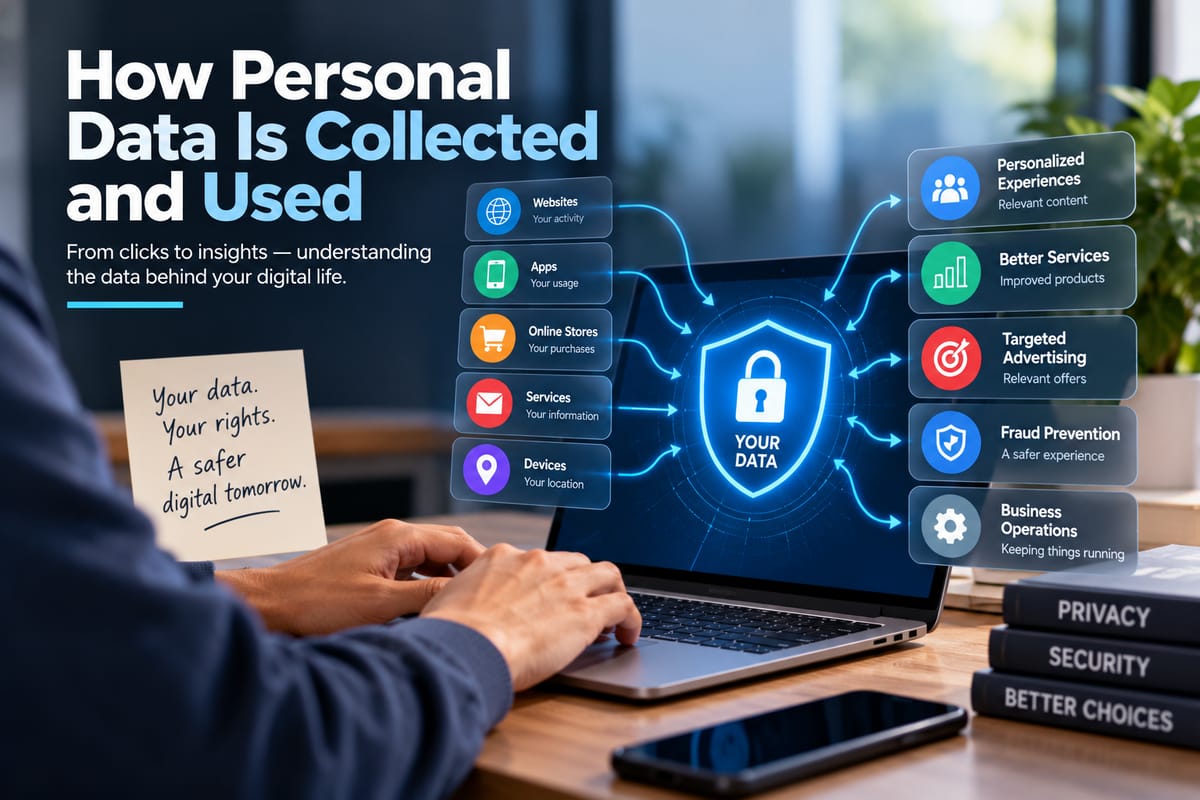
How Personal Data Is Collected and Used
Every time people browse the internet, use a smartphone, shop online, send a message or interact with a digital service, they create information about themselves.
Some of this information is provided deliberately. A person may enter their name when creating an account, provide a delivery address when making a purchase or submit an email address to receive updates.
Other information can be collected automatically. Websites and applications may record information about devices, approximate locations, browsing activity and how people interact with digital services.
Personal data has become one of the most important resources in the digital economy. Businesses use it to provide services, understand customers, personalize experiences, detect fraud and make decisions. At the same time, the growing collection of personal information has raised important questions about privacy, security, transparency and how much control individuals should have over their own data.
Understanding how personal data is collected and used is an important first step toward making more informed decisions online.
What Counts as Personal Data?
Personal data generally refers to information that identifies a person or can reasonably be associated with them.
Some examples are obvious, including:
- Full names
- Email addresses
- Phone numbers
- Home or mailing addresses
- Identification numbers
- Account usernames
- Photographs
Other information may be less obvious but can still be connected to an individual.
This can include IP addresses, device identifiers, location information, browsing activity, purchase histories and information about interactions with websites or applications.
The exact definition of personal data varies depending on the applicable privacy laws and circumstances.
The important point is that information does not necessarily need to contain someone's name to have privacy implications. Several pieces of information can sometimes be combined to identify or profile an individual.
Information People Provide Directly
One of the simplest ways personal data is collected is when people provide it themselves.
Creating an online account may require a name, email address and password. An online store may request a shipping address and payment information. A social media platform may ask users to provide information about their interests or profile.
People may also voluntarily provide information through:
- Online forms
- Surveys
- Customer support conversations
- Social media posts
- Reviews and comments
- Newsletter subscriptions
- Job applications
- Loyalty programs
- Mobile applications
In many cases, people provide this information because they want a particular service.
For example, a customer cannot normally receive an online purchase without giving the seller enough information to complete delivery.
Data Can Also Be Collected Automatically
Not all personal information is entered manually.
Websites and applications can collect certain technical information automatically when people use them.
Depending on the service and the technology involved, this may include information such as:
- IP addresses
- Browser type
- Operating system
- Device characteristics
- Language preferences
- Approximate location
- Pages visited
- Referring websites
- Interaction patterns
- Session information
Cookies and similar technologies can also be used to remember preferences, maintain sessions and understand how people interact with digital services.
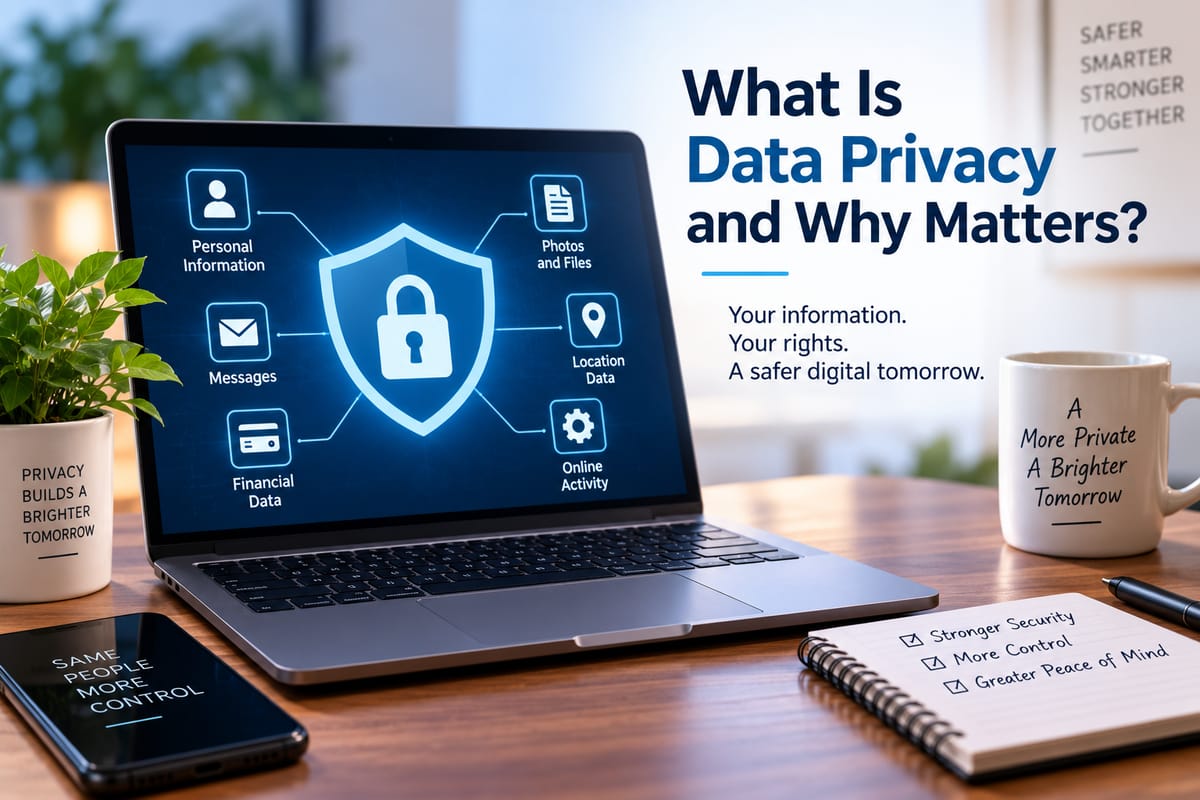
This is one reason understanding what digital privacy means and why it matters has become increasingly important as more everyday activities move online.
Cookies and Tracking Technologies
Cookies are small pieces of information that websites can store in a user's browser.
Some cookies are necessary for basic functionality. For example, they can help websites remember that a user is logged in or keep items in an online shopping cart.
Other tracking technologies can be used for analytics, advertising or personalization.
A website may use information about previous visits to understand which pages receive the most attention. Advertising systems may use activity across digital services to help determine which advertisements are likely to be relevant.
Modern websites can also use technologies beyond traditional cookies, including tracking pixels, browser storage and device-related signals.
The result is that a person's online activity can generate a considerable amount of information even when they are not deliberately submitting a form.
Why Businesses Collect Personal Data
Organizations collect personal data for many different reasons.
One of the most basic purposes is to provide a service.
A bank needs information about its customers to maintain accounts. An online retailer needs customer and delivery information to fulfill orders. A streaming service needs account information to manage subscriptions.
Businesses can also use information to:
- Improve products and services
- Understand customer behavior
- Personalize experiences
- Provide customer support
- Prevent fraud
- Maintain security
- Measure advertising effectiveness
- Analyze website performance
- Communicate with customers
- Meet legal or regulatory obligations
The purpose of collecting information should ideally be clear to the individual providing it.
Personalization Depends on Data
Many digital services use personal information to customize what users see.
An online shopping platform may recommend products based on previous purchases or browsing activity. A streaming service may suggest movies based on viewing behavior. A news platform may personalize content based on topics a person frequently reads.
Personalization can make digital services more convenient, but it also demonstrates how user behavior can become valuable information.
The more data an organization has, the more detailed its understanding of users may become.
That creates a trade-off between convenience and privacy that individuals increasingly need to consider.
Data Can Be Used for Advertising
Advertising is another major reason companies collect and analyze information.
Businesses want to reach people who are likely to be interested in their products or services. Data can help advertisers understand broad characteristics and behavioral patterns within audiences.
For example, an advertising system may use information about browsing behavior, interests or interactions to determine which advertisements to display.
This does not necessarily mean that an advertiser knows everything about an individual. Data may instead be processed into audience segments or statistical profiles.
Nevertheless, targeted advertising demonstrates how information about online behavior can have commercial value.
Data Can Help Detect Fraud
Personal information can also play an important role in security.
Banks, payment providers and online businesses can analyze transactions and account activity to identify unusual behavior.
A transaction that differs significantly from a customer's normal activity may trigger additional verification.
Similarly, websites can analyze login patterns, device information and other signals to detect potentially suspicious activity.
In these situations, collecting and analyzing data can help protect users rather than simply serving commercial purposes.
However, organizations must still protect the information they collect because security data can itself become a target for criminals.
Personal Data Can Be Shared
Information collected by one organization may sometimes be shared with other companies or service providers.
For example, a business may rely on external providers for:
- Cloud storage
- Payment processing
- Email delivery
- Customer support
- Analytics
- Advertising
- Fraud prevention
- Website hosting
Privacy policies typically explain categories of third parties that may receive or process information.
The details can vary significantly between services, which makes it worthwhile to review privacy notices before providing sensitive information.
Data Brokers and Information Aggregation
Another important part of the data ecosystem involves the aggregation of information from different sources.
Organizations can combine information to create broader profiles of individuals or groups.
A person's shopping behavior, online interactions, demographic information and other data points can potentially provide a more detailed picture than any single piece of information would provide by itself.
This is one reason privacy concerns are not limited to individual data points.
A seemingly harmless piece of information can become more revealing when combined with other information.
How Long Is Personal Data Kept?
Personal data does not necessarily disappear after a person stops using a service.
Organizations may retain information for different periods depending on why it was collected, legal requirements, business needs and internal policies.
For example, some information may need to be retained for financial or regulatory reasons. Other data may be kept to maintain account history or improve services.
Privacy policies may describe retention practices, although these policies can sometimes be difficult for ordinary users to interpret.
Individuals should therefore avoid assuming that deleting an application automatically deletes every piece of information associated with their account.
What Happens When Data Is Sold or Misused?
Personal data can become particularly problematic when it is obtained or used without appropriate safeguards.
Unauthorized access can expose information to criminals. Data breaches can reveal names, passwords, financial information or other sensitive details.
Information can also be misused for scams, impersonation, unauthorized account access and identity fraud.
The consequences can extend well beyond inconvenience.
People whose information has been compromised may need to change passwords, monitor financial accounts and take additional measures to protect themselves. A practical identity theft protection guide can help explain some of the steps people can take to reduce these risks.
Data Breaches Can Affect Millions of People
A data breach occurs when information is accessed, disclosed, altered or stolen without authorization.
Breaches can happen for many reasons, including cyberattacks, weak security controls, compromised credentials, software vulnerabilities or human mistakes.
The information exposed during a breach varies.
In some cases, attackers may obtain basic contact information. In more serious incidents, sensitive financial, health or identification information may also be affected.
Organizations therefore have a responsibility to implement appropriate security measures and respond quickly when incidents occur.
Individuals also benefit from using strong, unique passwords and enabling additional security protections wherever possible.
Privacy Laws Give People Certain Rights
Governments around the world have introduced privacy and data-protection laws that regulate how organizations collect, use and protect personal information.
The specific rules vary by country and jurisdiction.
Depending on the applicable law, individuals may have rights concerning access to their information, correction of inaccurate data, deletion, restrictions on certain processing activities or objections to particular uses.
Organizations may also be required to explain why information is being collected and how it will be used.
Because privacy laws differ, people should consult the rules applicable to their location when they need legal guidance.
Reading Privacy Policies Matters
Privacy policies can be long and complicated, but they contain important information about how a service handles user data.
When reviewing one, people can look for answers to several basic questions:
- What information is collected?
- Why is it collected?
- How is it used?
- Is it shared with other organizations?
- How long is it retained?
- What choices do users have?
- How can information be accessed or deleted?
- How is the information protected?
People do not necessarily need to understand every technical detail. Focusing on these core questions can provide a clearer picture of the privacy trade-offs involved.
People Can Reduce Unnecessary Data Collection
Individuals cannot always prevent companies from collecting information required to provide a service, but they can often reduce unnecessary exposure.
Simple steps include reviewing application permissions, limiting information shared on public profiles, removing unused accounts and checking privacy settings periodically.
People can also consider whether an application genuinely needs access to information such as contacts, location or microphone functions.
A useful online privacy guide can provide additional strategies for reducing unnecessary exposure while using digital services.
Protecting Personal Data Is a Shared Responsibility
Privacy is not solely the responsibility of individuals.
Businesses, technology providers and governments all play important roles in determining how personal information is collected, processed and protected.
Companies need strong security controls, transparent privacy practices and responsible data-management policies.
Technology providers need to consider privacy when designing products rather than treating it as an afterthought.
Governments can establish rules that give individuals meaningful protections and hold organizations accountable when data is mishandled.
Individuals, meanwhile, can make informed choices about what information they share and which services they use.
Staying Safer With Everyday Digital Information
Personal data has become deeply embedded in modern life. It helps people shop, communicate, work, manage finances, access entertainment and use countless online services.
That convenience comes with a cost: digital activity can generate detailed information about people's behavior and preferences.
Understanding the collection process makes it easier to recognize where privacy risks can arise.
People can reduce unnecessary exposure by using strong passwords, enabling multi-factor authentication, reviewing permissions, keeping software updated and being cautious about unexpected requests for personal information. More practical advice is available in staying safe in the digital world.
The Value of Knowing Where Your Data Goes
Personal data is no longer limited to information people intentionally write down or submit. It can also emerge from everyday interactions with websites, applications, devices and connected services.
That information can help businesses provide better products, prevent fraud and personalize experiences, but it can also create privacy and security risks when handled poorly.
The most useful response is not necessarily to avoid digital services altogether. Instead, it is to understand what information is being collected, why it is being collected and what happens after it is shared.
As technology becomes more deeply integrated into everyday life, knowing where personal information goes—and making deliberate choices about what to share—will remain an essential part of staying secure and maintaining control in the digital world.

One thought on “How Personal Data Is Collected and Used”