iPhone 18 Pro Expands to More Countries as Apple Begins Its Second Launch Wave
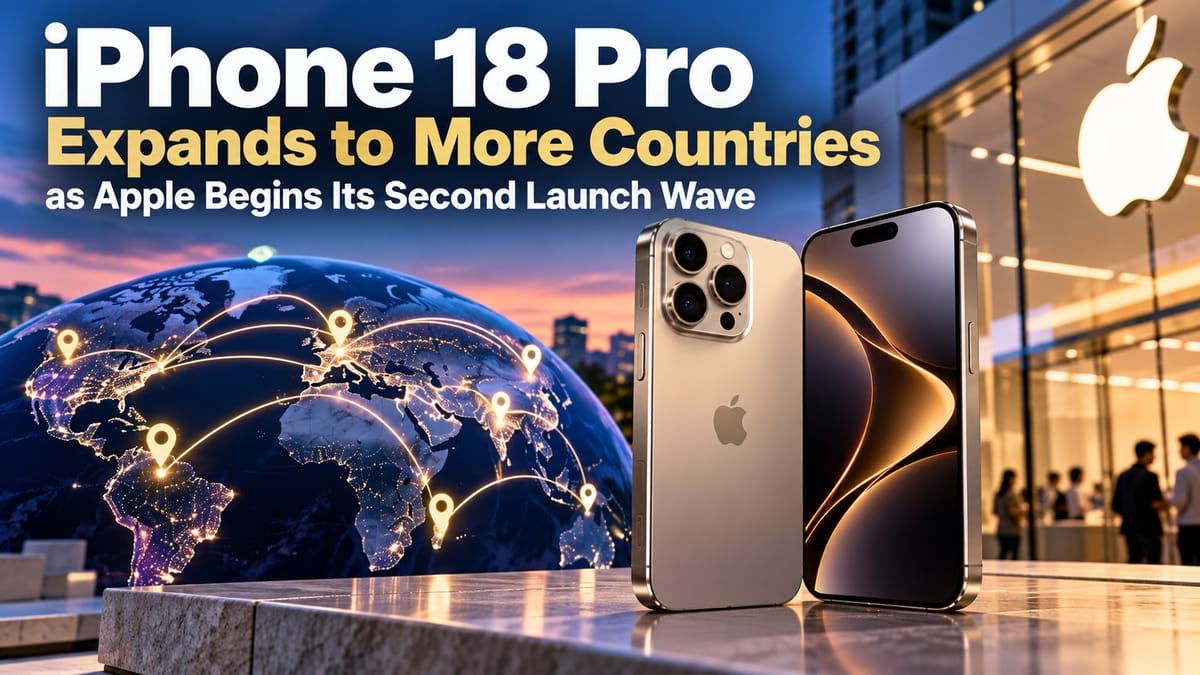
Apple is preparing to expand availability of the iPhone 18 Pro and iPhone 18 Pro Max as the company moves into the second phase of its global launch.
The two Pro models went on sale in more than 65 countries and regions on September 18, following pre-orders that opened on September 12. Apple has confirmed that 20 additional countries and regions will receive the iPhone 18 Pro and iPhone 18 Pro Max beginning September 25.
The second wave gives more customers access to Apple's newest high-end iPhones just days after the initial launch, extending the reach of a lineup that introduces changes to camera technology, performance, battery design and Apple Intelligence.
Apple's Second Launch Wave Begins September 25
Apple announced the second-wave date alongside the original launch schedule.
The first group included major markets such as the United States, United Kingdom, Canada, Australia, China, Japan, India, France, Germany, Singapore, South Korea, the United Arab Emirates and Vietnam, among others. The initial group covered more than 65 countries and regions.
The company has confirmed that another 20 countries and regions will receive the Pro models beginning Friday, September 25.
Apple has not publicly identified all 20 markets in the launch announcement, so specific claims about the complete second-wave country list should be treated cautiously.
For customers in those markets, the September 25 date represents the next major opportunity to purchase the latest Pro models through Apple's official distribution network and participating retail and carrier partners.
Why Apple Uses Multiple Launch Waves
Apple's staggered launches are part of the way the company manages global product introductions.
Launching a flagship smartphone simultaneously in every market would require enormous coordination across manufacturing, logistics, retail inventory, regulatory approvals, carrier relationships and local distribution.
A phased rollout gives Apple more flexibility.
The first wave typically focuses on large or strategically important markets, while subsequent waves extend availability to additional regions.
For consumers, the system also means that release-day conversations and reviews can begin in some countries before others have access to the device.
The iPhone 18 Pro Is Built Around Performance
The iPhone 18 Pro and Pro Max are powered by Apple's A20 Pro chip.
Apple says the new processors are paired with a next-generation vapor chamber designed to support sustained performance. The company has also highlighted improvements to battery life and silicon efficiency.
Processor performance matters beyond benchmark scores.
The chip affects how quickly applications open, how efficiently demanding games run, how quickly photographs are processed and how effectively AI features can operate on the device.
For a broader explanation of this relationship, How Smartphone Processors Affect Performance explores how mobile processors influence everyday smartphone use.
The Camera System Gets One of the Biggest Upgrades
Photography remains one of the defining features of the Pro iPhone lineup.
The iPhone 18 Pro introduces a 48-megapixel Fusion Main camera with a variable aperture, giving users greater control over how much light enters the lens.
Apple says the variable-aperture system provides creative control that previous iPhone cameras did not offer.
This moves the iPhone's camera system closer to some of the physical controls traditionally associated with dedicated cameras.
Rather than relying entirely on computational processing to determine exposure characteristics, the variable aperture gives the camera another physical mechanism for adapting to different shooting conditions.
Computational Photography Remains Important
The variable-aperture system does not mean computational photography is becoming less important.
Modern smartphone photography depends on a combination of lenses, sensors, image processors and software.
The phone can capture and process information rapidly, combining multiple frames and computational techniques to produce the final image.
Understanding that process helps explain why smartphone cameras can produce detailed photographs despite the physical limitations of a thin phone body. How Smartphone Computational Photography Works provides a deeper explanation of the technology behind these systems.
The iPhone 18 Pro therefore combines traditional camera principles with Apple's increasingly sophisticated computational photography systems.
Storage Now Reaches 2TB
Apple has also expanded storage options for the Pro models.
The iPhone 18 Pro and iPhone 18 Pro Max are offered with 256GB, 512GB, 1TB and 2TB storage configurations.
The 2TB option is particularly relevant to people who record large amounts of high-resolution video, store extensive photo libraries or use their iPhone for professional content creation.
Higher storage capacity can also become useful as smartphone cameras produce increasingly large files.
For ordinary users, however, the higher-capacity configurations represent a significant increase in purchase cost, making storage selection an important part of the buying decision.
Four Colors Define the New Pro Line
The iPhone 18 Pro lineup is available in four finishes:
- Black
- Silver
- Glacier
- Burgundy
Apple has also introduced a new range of cases and accessories for the models, including TechWoven, Clear and Silicone cases, along with wrist and crossbody straps.
The broader accessory ecosystem allows Apple to generate additional revenue around the hardware while giving customers more ways to personalize the device.
iPhone 18 Pro Starts at $1,199 in the U.S.
In the United States, the iPhone 18 Pro starts at $1,199, while the iPhone 18 Pro Max starts at $1,299, with both starting configurations offering 256GB of storage.
Pricing varies considerably between countries because of taxes, currency exchange rates, local distribution costs and other market factors.
That means the U.S. starting price should not be treated as a direct indication of what customers will pay in every second-wave market.
For buyers comparing the new iPhone with competing devices, the total cost can also include accessories, storage upgrades, insurance, carrier plans and trade-in arrangements.
Choosing the Right Smartphone Is More Complicated Than Comparing Specs
The arrival of another premium smartphone illustrates how complicated technology purchasing has become.
Modern devices combine processors, cameras, displays, batteries, AI capabilities, connectivity features and software ecosystems.
The most expensive model is not necessarily the right choice for every user.
Someone who primarily uses a phone for messaging, social media and photography may have different requirements from a mobile gamer, photographer, business user or content creator.
The broader principles covered in How to Choose the Right Technology Devices can help put individual specifications into the context of actual needs.
Apple Intelligence Adds Another Layer
The iPhone 18 Pro is also part of Apple's broader push to make artificial intelligence a central part of its devices.
Apple has positioned the new Pro models around improvements in intelligence alongside camera, performance and battery upgrades.
The importance of these features will depend partly on software availability.
AI capabilities can also vary by language and region because of regulatory requirements, infrastructure and other factors. Apple specifically notes that some iOS features may not be available in every language or region.
That makes regional availability an important part of the iPhone's global rollout.
iOS 27 Arrived Before the Second Wave
The iPhone 18 Pro launch is closely tied to Apple's latest software platform.
Apple released iOS 27 as a free software update on September 14, four days before the first iPhone 18 Pro units arrived in stores.
That timing means existing iPhone users can experience some of Apple's new software features without buying the new hardware.
At the same time, certain capabilities can depend on newer hardware, meaning the full experience is not necessarily identical across every compatible iPhone.
This distinction is becoming increasingly important as smartphone upgrades become more software-driven.
The Pro Max Targets a Different Type of User
The iPhone 18 Pro Max occupies the top position in the lineup.
Its larger physical size provides additional room for the display and battery, while its starting price is $100 above the standard Pro in the U.S.
The choice between the two models therefore comes down to more than simply selecting the more expensive version.
Size, portability, battery requirements, storage needs and how the phone will be used can all influence the decision.
For users who prioritize a larger screen and extended battery capacity, the Pro Max offers a different balance from the smaller Pro.
Global Availability Could Increase Apple's Reach
The second wave matters because smartphone markets are increasingly global.
Customers may follow product launches online for weeks before a device officially reaches their local market. Social media, technology reviews and international pricing comparisons can create awareness well before local availability begins.
By September 25, another 20 countries and regions will join the iPhone 18 Pro rollout.
That gives Apple another opportunity to turn global interest into actual sales.
It also means more consumers will be able to compare the new Pro models directly with competing flagship smartphones available in their markets.
The iPhone 18 Pro Is Part of a Bigger Apple Lineup Change
The 2026 iPhone launch is unusual because Apple has also introduced the iPhone Duo, its first foldable iPhone.
The foldable device represents a different direction for Apple's smartphone hardware, while the iPhone 18 Pro continues the company's established premium slab-phone design.
That gives consumers more than one interpretation of what a high-end iPhone can be.
The Pro models focus on advanced cameras, performance, battery life and AI, while the foldable model introduces a substantially different form factor.
What the Second Wave Means for Buyers
For customers waiting for the iPhone 18 Pro in a later market, September 25 marks the next important date in Apple's launch calendar.
The basic considerations remain familiar: choose between the Pro and Pro Max, decide how much storage is needed, compare local pricing and determine whether upgrading from an existing device provides enough practical benefit.
The new camera system, A20 Pro chip, larger storage options and AI capabilities give Apple several major selling points, but the importance of each feature will depend on how an individual uses a smartphone.
As the iPhone 18 Pro expands beyond its initial launch markets, the focus will increasingly shift from Apple's announcement to the everyday experience of using the device.
For Apple, the second wave extends the reach of its newest flagship. For consumers, it brings another high-end smartphone option into more markets and gives them an opportunity to decide whether the latest combination of camera technology, processing power, storage and intelligence represents a meaningful upgrade.