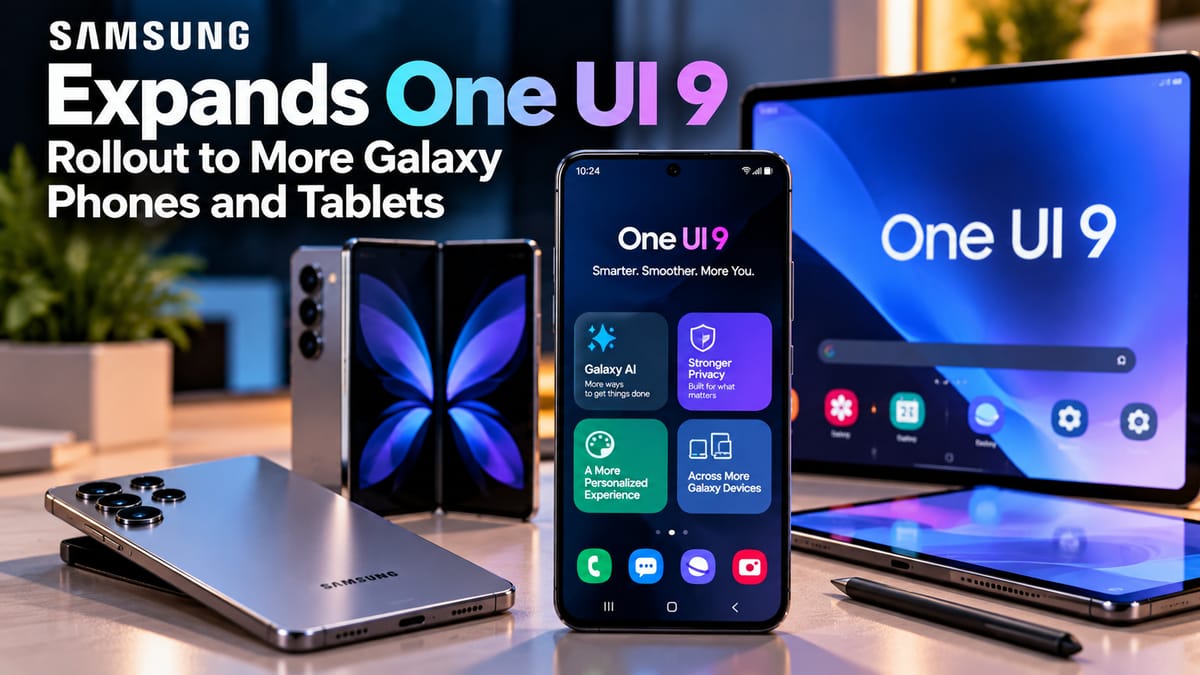
Samsung Expands One UI 9 Rollout to More Galaxy Phones and Tablets
Samsung is expanding the rollout of One UI 9 to more Galaxy smartphones and tablets, bringing a new generation of Android-based software features, enhanced Galaxy AI tools and additional privacy protections to a growing range of devices.
The update officially began rolling out in September 2026, starting with the Galaxy S26, Galaxy S26+ and Galaxy S26 Ultra after One UI 9 debuted on Samsung's latest foldable phones. Samsung says the update will continue reaching eligible Galaxy smartphones and tablets in phases, with timing varying by device, region and carrier.
For Galaxy owners, the update is more than a visual refresh. Samsung is using One UI 9 to push its software strategy further toward artificial intelligence, contextual assistance, personalization and device security.
One UI 9 Moves Beyond a Traditional Software Update
Samsung's One UI interface has become one of the defining parts of the Galaxy experience.
While Android provides the underlying operating system, One UI determines much of how users interact with Samsung phones and tablets, from the Quick Panel and Settings menus to Samsung's apps, multitasking features and AI-powered tools.
One UI 9 is based on Android 17 and builds on that foundation with a greater emphasis on AI-assisted interactions. Samsung's earlier One UI 9 beta introduced changes to customization, accessibility, security and creative tools before the stable rollout began.
For consumers trying to understand why major software updates can affect everything from performance to security and battery behavior, How Software Updates Work and Matter provides useful background.
The Rollout Starts With Newer Galaxy Devices
Samsung's official rollout began with the Galaxy S26 family in September.
The company's newest foldables — the Galaxy Z Fold8 Ultra, Galaxy Z Fold8 and Galaxy Z Flip8 — had already launched with One UI 9, making them the first Galaxy devices to offer the new software experience.
The Galaxy S26, S26+ and S26 Ultra then became the first existing flagship series to receive the stable update as Samsung began expanding availability.
Samsung has also indicated that additional eligible smartphones and tablets will receive One UI 9 progressively rather than all at once. That staged approach is common with major Android updates because manufacturers need to adapt software for different hardware configurations, regional firmware versions and carrier requirements.
More Galaxy Phones and Tablets Are Part of the Expansion
One of the most important aspects of the One UI 9 rollout is its reach across different Galaxy product categories.
Samsung's published feature compatibility information lists One UI 9-related capabilities across devices including the Galaxy S25, S24 and S23 families, several Galaxy Z foldables, and Galaxy Tab S11, S10 and S9 models. However, individual features can have different hardware and regional requirements.
That distinction is important.
Receiving One UI 9 does not necessarily mean every Galaxy device will receive every new feature. AI tools in particular can depend on processing capability, device generation, language, region, account settings and whether a feature requires an internet connection.
Samsung has also stated that availability and performance can vary according to device model, country, language and One UI version.
Galaxy AI Becomes More Central to One UI
Artificial intelligence is one of the biggest themes in One UI 9.
Samsung is adding more ways for Galaxy devices to understand context and assist users with everyday tasks rather than simply waiting for traditional commands.
One example is Now Nudge, which can provide context-aware suggestions based on what users are doing. Samsung gives examples involving conversations, reservations and shared locations, allowing users to access relevant actions without necessarily leaving the task they are performing.
This reflects a broader change in smartphone software.
Instead of treating apps as completely separate destinations, manufacturers are increasingly trying to make the operating system understand what a person is doing across multiple applications.
Now Brief Gets More Personalized
Samsung is also expanding personalization through Now Brief.
One UI 9 introduces generative and editable cards that allow users to have greater control over the information presented in their daily briefings. Samsung says users can create cards covering categories such as wellness, weather and video.
The goal is to make the phone more proactive.
Rather than requiring users to open several applications individually, the software can bring selected information together in a more personalized format.
That approach could become increasingly important as smartphones compete to become AI assistants rather than simply communication devices.
My FanCam Brings AI Into Video
One of the more visible new features is My FanCam, which uses AI to track a selected person in recorded video.
When the subject moves, the feature can automatically adjust the framing to keep that person centered. Samsung positions the feature as a way to make dynamic moments easier to capture and share without requiring extensive manual editing.
The feature illustrates how AI is increasingly being integrated directly into smartphone cameras.
Instead of simply improving image quality after a photo or video has been captured, AI can now influence how the device frames and processes the content while users are creating it.
Creative Tools Become More Context-Aware
Samsung is also expanding the connection between AI and content creation.
Creative Studio can provide image-generation suggestions based on relevant upcoming events. Samsung gives examples involving birthdays and personalized greetings, allowing the software to suggest creative possibilities without requiring users to start entirely from scratch.
This continues a broader trend in consumer technology where generative AI is moving from standalone applications into operating systems.
The result is a smartphone experience in which AI capabilities increasingly appear inside familiar tools rather than existing only in dedicated chatbots or separate applications.
Privacy Becomes an AI Feature
One UI 9 is also using AI for something less visible but potentially more important: privacy monitoring.
Samsung's enhanced Privacy Alerts can use on-device AI to identify potential privacy risks, including unnecessary attempts to access permissions in the background.
The company says the feature is supported across a range of newer Galaxy smartphones, foldables and tablets, although Samsung cautions that the alerts may not account for every relevant factor.
The emphasis on on-device processing is notable because privacy has become a major consideration as smartphones gain more AI capabilities.
Consumers increasingly want intelligent features without necessarily giving every piece of personal information to a remote service.
Scam Detection Expands to More Users
Samsung is also expanding Scam Detection, which is designed to help identify potentially suspicious calls.
The company says availability varies by country, region, language, device model and software version, while the feature is being expanded to additional markets and languages. Samsung specifically lists Japan, Canada and India for the expanded availability announced with the rollout.
This puts smartphone software in a more active role in protecting users.
Instead of relying exclusively on users to recognize suspicious activity, the device can provide another layer of automated detection.
Better Device Support From the Settings Menu
One UI 9 also makes device support easier to access.
Samsung has integrated warranty and care information more directly into the settings experience. Depending on the device and market, users can access warranty information, diagnostics, estimated repair costs and Samsung Care+ services.
This may seem less exciting than new AI features, but it addresses an important part of smartphone ownership.
As phones become more expensive and technically sophisticated, managing repairs, warranties and device health is becoming an increasingly important part of the overall user experience.
The Hardware Still Matters
Software features do not operate independently from smartphone hardware.
The processor, memory, storage, camera system and other components determine what a device can realistically accomplish.
That becomes particularly important with AI.
Some AI tasks can be processed directly on a smartphone, while more demanding workloads may rely on cloud infrastructure. Newer processors can provide greater performance and more efficient on-device processing.
The relationship between chip design and everyday smartphone performance is explored in How Smartphone Processors Affect Performance.
This is one reason Samsung's newest devices tend to receive the most comprehensive software experiences.
Foldables Give One UI Another Challenge
Samsung also has to adapt One UI for increasingly diverse form factors.
Foldable smartphones require software that can respond to different screen sizes and orientations while supporting multitasking and continuity between folded and unfolded states.
One UI 9 was designed to work across different Galaxy form factors, including Samsung's latest foldables.
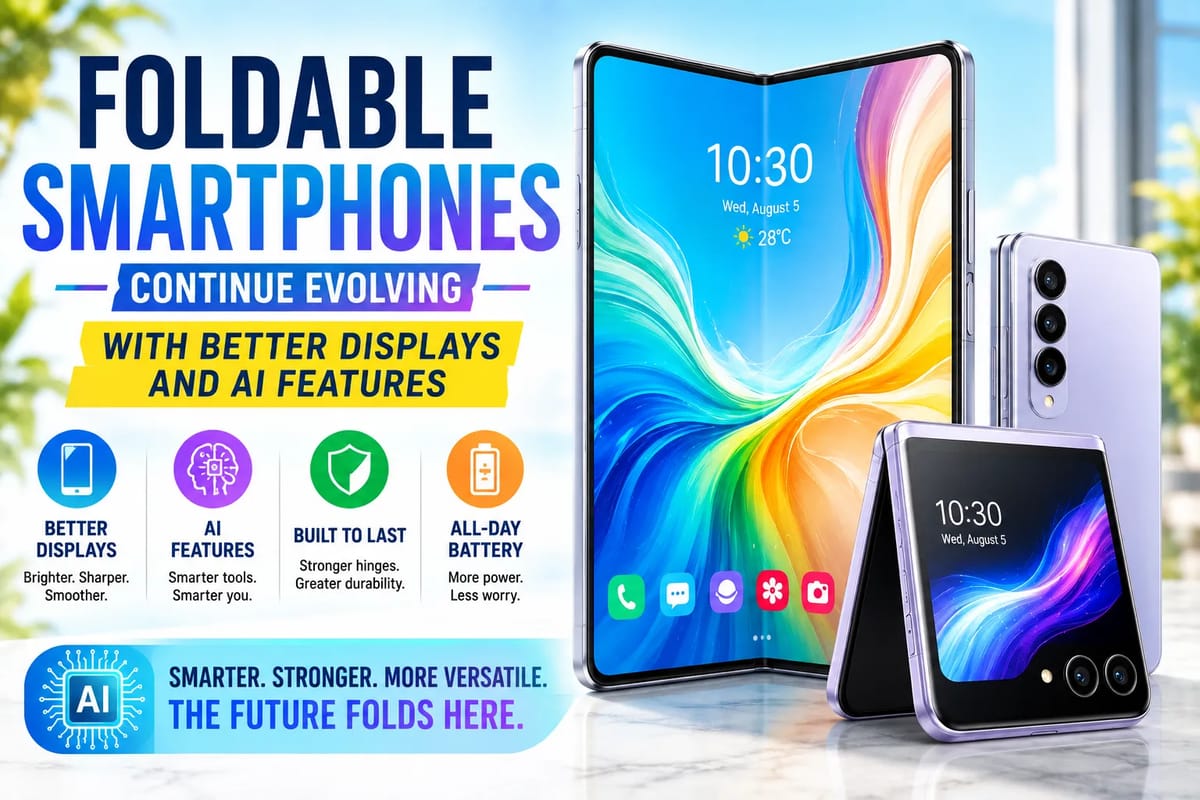
The evolution of this category is closely tied to AI as well. Foldable Smartphones Evolving With AI examines how flexible displays and increasingly intelligent software are becoming part of the same smartphone strategy.
For Samsung, the combination is particularly significant because the company has invested heavily in foldable hardware while simultaneously positioning Galaxy AI as a central part of its mobile ecosystem.
Tablets Benefit From the Same Software Direction
Samsung's tablet lineup is another important part of the One UI 9 expansion.
Large-screen Galaxy devices can take advantage of software features that are less practical on conventional smartphones. Multitasking, split-screen applications, large displays and productivity tools can all benefit from a more adaptable user interface.
Samsung's compatibility information for One UI 9 features includes several Galaxy Tab generations, including Tab S11, Tab S10 and Tab S9 models.
However, users should check the update availability for their specific model and market rather than assuming that every tablet receives the update at the same time.
Why Samsung Is Rolling Out One UI 9 in Phases
Major Android updates rarely reach every eligible device simultaneously.
Samsung has to account for differences in hardware, firmware, carrier certification and regional requirements. The company also needs to monitor early releases for bugs or compatibility problems before expanding the software to additional devices.
Samsung's official announcement explicitly says that One UI 9 is expected to roll out gradually to other Galaxy devices.
That means two owners of similar Galaxy phones can sometimes see different update availability depending on where they live or which carrier they use.
A delayed update does not necessarily mean a device has been excluded.
What Galaxy Owners Should Check
Users waiting for One UI 9 can check their Galaxy device's software-update section to see whether the update has become available.
Before installing a major operating-system update, it is sensible to:
- Back up important information.
- Make sure the device has sufficient storage.
- Connect to a reliable Wi-Fi network.
- Keep the battery adequately charged.
- Check which new features are supported by the specific model.
- Review any important changes to privacy or application permissions.
- Allow additional time for the device to optimize after installation.
The update process itself can take longer than a normal application update because an operating-system upgrade changes multiple components of the device's software environment.
One UI 9 Shows Where Smartphones Are Heading
The significance of One UI 9 extends beyond Samsung's interface design.
The update illustrates how smartphone operating systems are evolving from collections of apps and settings into more intelligent layers that attempt to understand context, anticipate tasks and protect users.
AI is increasingly embedded into cameras, messaging, translation, personalization, privacy and device management.
At the same time, Samsung is attempting to make these capabilities available across phones, foldables and tablets rather than limiting them to one product category.
That strategy could make software support an increasingly important factor in how consumers evaluate smartphones. Hardware specifications still matter, but the usefulness of a device increasingly depends on what its software can do with that hardware.
The Next Galaxy Experience Will Be More Software-Driven
Samsung's One UI 9 rollout is still a phased process, and exact availability will continue to vary across devices and markets.
But the direction is clear.
Samsung is using its latest software to bring AI deeper into everyday Galaxy interactions while also emphasizing personalization, privacy, security and cross-device usability.
For consumers, that means a Galaxy phone or tablet is becoming less defined by its launch-day specifications and more by how its software evolves over time.
One UI 9 is another step toward that model, where the operating system itself becomes an increasingly important part of the technology experience.