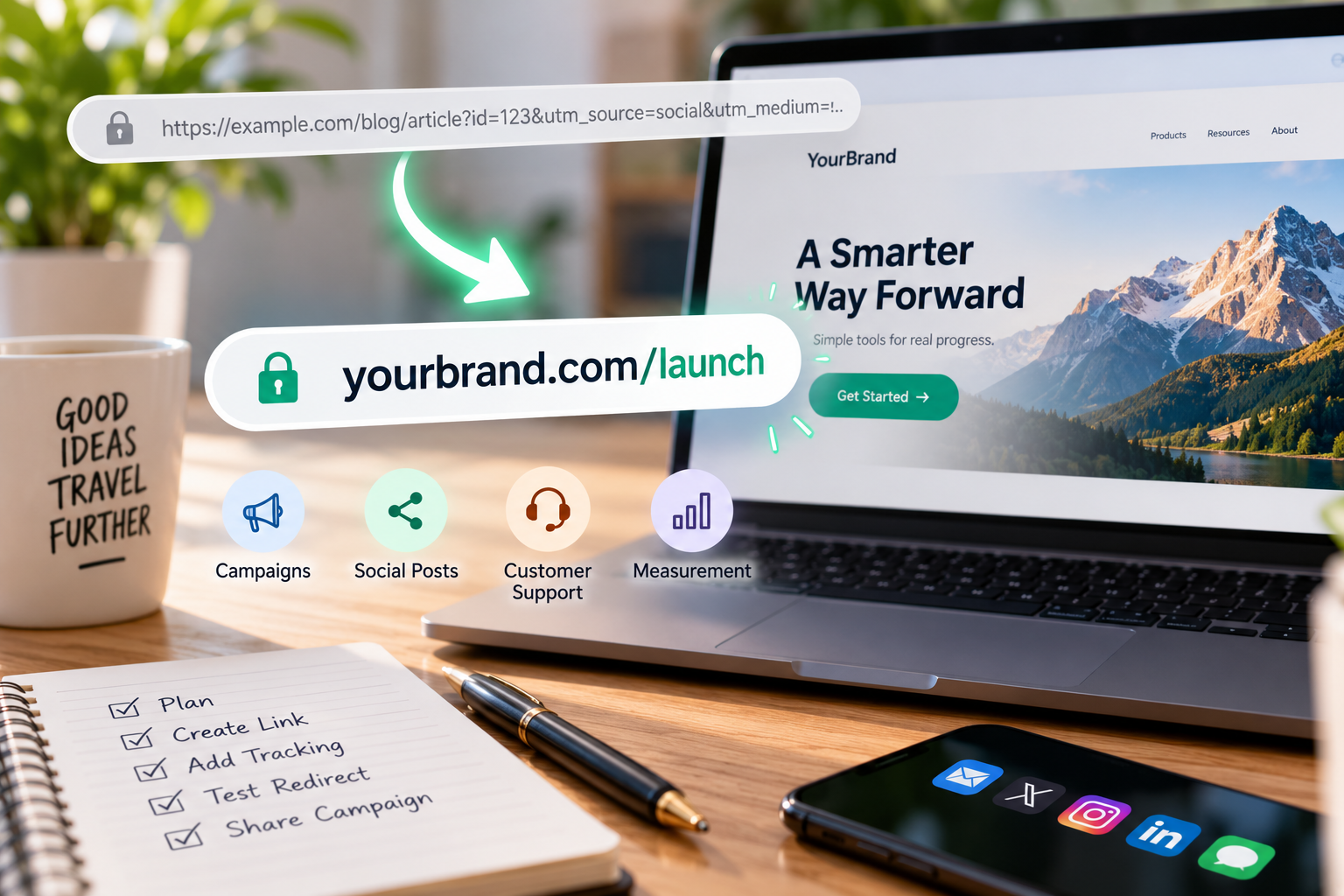
A vanity URL replaces a long, generic web address with a short link that is easier to recognise, remember and share. For a software team, marketer or independent professional, it can make a campaign link clearer without changing the page visitors ultimately reach. The useful question is not simply how to make one, but how to keep it reliable, measurable and appropriate for the audience.
A vanity URL usually includes a brand, product or meaningful phrase in its domain or path. For example, a business might use a branded domain followed by a short campaign name instead of a long address containing tracking parameters. The destination can still be a page on the company’s main site; a redirect connects the two. A guide to vanity URLs can help clarify how these links differ from ordinary addresses and generic shorteners.
What makes a URL “vanity”?
The term describes a link chosen partly for its readable, branded appearance. It does not necessarily mean the URL is short, nor does it describe a special web protocol. Underneath, it works like any other address: a domain points to a server, and the server returns a page or redirects the visitor elsewhere.
A regular URL may expose a complicated path, session data or campaign parameters. A generic shortening service compresses that address, often using a shared domain and random characters. A vanity URL instead uses a custom, recognisable name. The distinction matters because a clean link can tell people what to expect before they click, while a generic short link may offer little context.
Where branded links are useful
- Campaigns: A memorable address is easier to place in an email, presentation, podcast or printed material. Teams can also create distinct paths for separate promotions.
- Social posts: Short, readable links can fit more comfortably in captions and are easier to repeat aloud or type manually.
- Customer support: A support team can share a simple route to a frequently used resource without asking customers to navigate a complex site menu.
- Measurement: Different campaign links can redirect to the same destination while carrying separate tracking information, making it easier to compare sources.
These benefits depend on sound setup. A branded link is not automatically a tracking system, and it does not prove that a visitor completed a purchase or other action. Analytics still need to be configured at the destination, with consistent campaign naming and appropriate consent practices.
Planning a vanity URL
Start with the audience and the task. A link for a one-time event might use a short campaign path, while a permanent product or help page needs a name that will remain accurate. Keep wording concise, avoid ambiguous abbreviations and check how it looks when spoken, printed and viewed on a phone. If a phrase could be mistaken for another word or brand, choose a clearer alternative.
Next, decide whether to use a path on your existing domain or a separate branded domain. A path such as a short name after your main domain can keep the link visibly connected to the site. A dedicated domain may be useful for campaign materials, but it introduces extra administrative work: registration, renewal, DNS configuration, HTTPS certificates and access control. Someone on the team should own those details.
Implement redirects carefully. Use a permanent redirect when a destination has genuinely moved for the long term, and a temporary redirect when the route is expected to change back. Test the link on desktop and mobile, confirm that it reaches the intended page, and check that tracking parameters survive the redirect. Avoid chains of redirects, which can slow loading and make troubleshooting harder.
SEO, trust and maintenance
A vanity URL is not a shortcut to higher search rankings. Search engines evaluate the destination and its content, among many other signals; a more attractive redirect does not make a page more relevant. Branded links can still support a consistent campaign experience, and a properly configured redirect can help visitors reach the right page, but the underlying site should use clear navigation, useful content and appropriate canonical settings.
Trust deserves equal attention. Use a domain your audience can recognise, explain the destination when the context is not obvious, and avoid changing a link’s destination without good reason. Links printed on packaging or posted in a long-lived document may remain in circulation for years. Keep a record of each redirect, its owner, intended destination and any expiry date. Periodically test older links and remove obsolete routes only after considering whether people may still rely on them.
Links as part of a wider digital workflow
People building online businesses also need to think about how they present services, not just how they share them. A freelancer can use a clear profile and specific service offers to help prospective clients understand what is available. For anyone weighing a freelance affiliate programme against selling work directly, these are different models: referrals earn commission, while a marketplace connects buyers with service providers. Osdire is one example of a marketplace where freelancers publish offers across many categories; its freelancer guide to getting discovered outlines how that process works.
Whether a link supports a campaign or a service listing, the same principle applies: make the next step understandable. A vanity URL can reduce friction when it is memorable, properly maintained and matched to a useful destination. Treat it as a small but deliberate part of the user experience, and it will be easier to trust, measure and manage over time.