How Organizations Build Cybersecurity Programs
Cybersecurity has become a fundamental part of running an organization. Businesses, government agencies, nonprofits, schools, healthcare providers, and other institutions rely on digital systems to store information, communicate with customers, process transactions, and deliver essential services. As those systems become more connected, protecting them requires more than installing antivirus software or creating a few security policies.
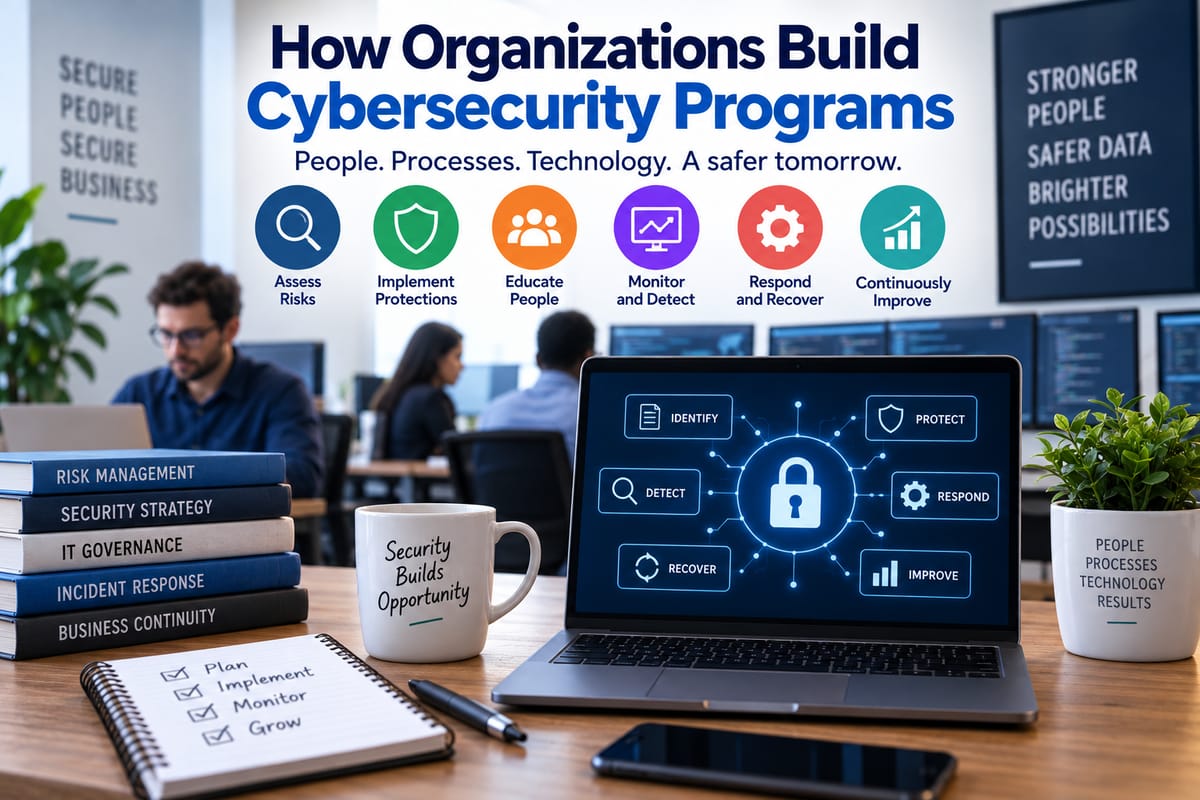
Organizations build cybersecurity programs by combining people, processes, technologies, policies, and ongoing risk management into a coordinated approach. The goal is not simply to prevent every possible attack, which is rarely realistic, but to reduce risk, identify threats, protect important assets, respond effectively to incidents, and recover when something goes wrong.
What Is a Cybersecurity Program?
A cybersecurity program is a structured set of policies, processes, technologies, responsibilities, and practices designed to protect an organization's digital systems and information.
A program typically addresses several major objectives:
- Identifying cybersecurity risks
- Protecting systems and sensitive information
- Detecting suspicious activity
- Responding to security incidents
- Recovering from disruptions
- Meeting legal and regulatory requirements
- Educating employees about security
- Continuously improving security practices
A small organization may operate its cybersecurity program with a few employees and outsourced specialists, while a large enterprise may have dedicated security departments, security operations centers, compliance teams, engineers, analysts, and executive leadership.
Regardless of size, the underlying principle is similar: cybersecurity should be managed as an ongoing organizational function rather than a one-time technology project.
Organizations Start by Understanding What They Need to Protect
Before deciding which security tools to purchase, organizations need to understand what they actually have.
This usually involves creating an inventory of important assets, including:
- Computers and laptops
- Servers
- Cloud services
- Mobile devices
- Network infrastructure
- Applications
- Databases
- Customer information
- Employee information
- Financial records
- Intellectual property
- Business communications
- Third-party services
An accurate asset inventory gives security teams a clearer picture of the organization's digital environment.
For example, an organization cannot effectively protect an application that nobody knows exists. Similarly, an old server that has been forgotten but remains connected to the network can become a security weakness.
Asset discovery therefore becomes one of the foundations of a mature cybersecurity program.
Cybersecurity Programs Are Built Around Risk
Organizations cannot protect every asset in exactly the same way. Some systems are far more important than others, and some threats are more likely or more damaging than others.
This is why cybersecurity programs rely heavily on risk assessment.
A risk assessment can examine questions such as:
- What assets are most valuable?
- What threats could affect those assets?
- Which vulnerabilities exist?
- How likely is a particular incident?
- What could happen if an attack succeeds?
- Which risks require immediate attention?
- Which risks can be accepted, transferred, reduced, or avoided?
Organizations can learn more about this process through Understanding Cybersecurity Risk Management, which focuses on how cybersecurity risks are identified, assessed, and managed.
Risk-based thinking helps organizations prioritize limited resources. A company may discover dozens of security weaknesses, but fixing the most dangerous problems first can provide greater protection than treating every issue as equally urgent.
Leadership Establishes the Security Direction
Cybersecurity programs require organizational support from leadership.
Executives and senior managers influence cybersecurity by deciding how much attention and funding should be devoted to security, establishing organizational priorities, and determining who is responsible for major security decisions.
A strong program usually has clearly defined responsibilities.
Depending on the organization's size, these may include:
- Chief information security officers
- Security managers
- IT administrators
- Security engineers
- Security analysts
- Privacy professionals
- Compliance teams
- Risk managers
- Human resources representatives
- Legal professionals
- Business leaders
Leadership also helps establish acceptable levels of risk. Cybersecurity decisions frequently involve trade-offs between security, cost, convenience, productivity, and business requirements.
When cybersecurity is treated as an executive responsibility rather than only an IT concern, security considerations are more likely to become part of broader business planning.
Security Policies Turn Expectations Into Rules
Policies provide a framework for how people are expected to use organizational technology.
Common cybersecurity policies address areas such as:
- Password and authentication requirements
- Acceptable use of company systems
- Remote access
- Personal devices
- Data handling
- Email security
- Software installation
- Cloud services
- Access permissions
- Incident reporting
- Security awareness
- Vendor access
Policies should be understandable and practical. A complicated policy that employees cannot realistically follow may provide less protection than a simple policy that is consistently implemented.
Organizations also need procedures that explain how policies are put into practice.
For example, a policy might require multi-factor authentication, while an operational procedure explains how employees enroll their accounts, recover access, and report authentication problems.
Identity and Access Management Are Core Components
One of the most important questions in cybersecurity is determining who can access what.
Organizations use identity and access management practices to control access to systems and information.
Common measures include:
- Unique user accounts
- Strong authentication
- Multi-factor authentication
- Role-based access
- Privileged account controls
- Regular access reviews
- Account provisioning and deprovisioning
- Session management
The principle of least privilege is particularly important. Users should generally receive only the access they need to perform their responsibilities.
Access should also change when people's roles change. An employee who moves to another department may no longer need access to systems associated with their previous position.
Likewise, accounts belonging to people who leave an organization should be disabled promptly.
Organizations Build Layers of Technical Protection
Cybersecurity programs typically use multiple security controls rather than relying on one technology.
A layered approach can include:
- Firewalls
- Endpoint protection
- Email security
- Network monitoring
- Encryption
- Vulnerability scanning
- Intrusion detection
- Security logging
- Multi-factor authentication
- Data loss prevention
- Backup systems
- Application security controls
Network protection is particularly important because many organizational systems communicate across internal and external networks. A Complete Guide to Network Security provides broader context on how networks can be protected against unauthorized access, malicious activity, and other threats.
The purpose of layered security is to create multiple opportunities to prevent or limit an attack. If one control fails, another may detect or restrict the activity.
Security Monitoring Helps Organizations Detect Problems
Prevention alone is not enough because attackers can sometimes bypass security controls.
Organizations therefore establish monitoring capabilities that look for unusual or suspicious activity.
Security monitoring may involve collecting and analyzing:
- Authentication events
- Network traffic
- Firewall activity
- Endpoint alerts
- Application logs
- Cloud activity
- Database activity
- Email security events
- Privileged account activity
Security operations teams can then investigate unusual behavior and determine whether it represents a legitimate event, a technical problem, or a potential attack.
Organizations interested in this part of cybersecurity can explore How Security Operations Teams Monitor Systems and Detect Cybersecurity Threats.
Monitoring becomes especially valuable when organizations establish clear procedures for escalating suspicious activity.
Incident Response Is Planned Before an Attack
A cybersecurity program should assume that incidents can happen.
Incident response planning establishes what an organization will do when something goes wrong.
A response plan may address:
- Preparation — Establishing procedures, responsibilities, tools, and communication channels.
- Identification — Determining whether a security event is actually an incident.
- Containment — Limiting the spread or impact of the incident.
- Eradication — Removing the underlying threat.
- Recovery — Restoring systems and returning operations to normal.
- Lessons learned — Reviewing what happened and improving defenses.
Without a plan, organizations may lose valuable time deciding who should act and how the incident should be handled.
Incident response plans should also identify important internal and external contacts. Depending on the incident, an organization may need to involve executives, legal teams, insurers, technology providers, law enforcement, regulators, customers, or other stakeholders.
Backups Are Part of Cybersecurity
Backups help organizations recover from data loss, system failures, ransomware incidents, accidental deletion, and other disruptions.
An effective backup strategy considers:
- What data needs to be backed up
- How frequently backups should occur
- Where backups are stored
- How long backups should be retained
- Who can access them
- How backups are protected
- How restoration will be performed
Simply having a backup does not guarantee that recovery will work. Organizations should periodically test whether important data can actually be restored.
Backup systems should also be protected from unauthorized access. If attackers can easily access and modify production backups, a successful attack could affect both primary systems and recovery resources.
Employee Awareness Is a Major Part of the Program
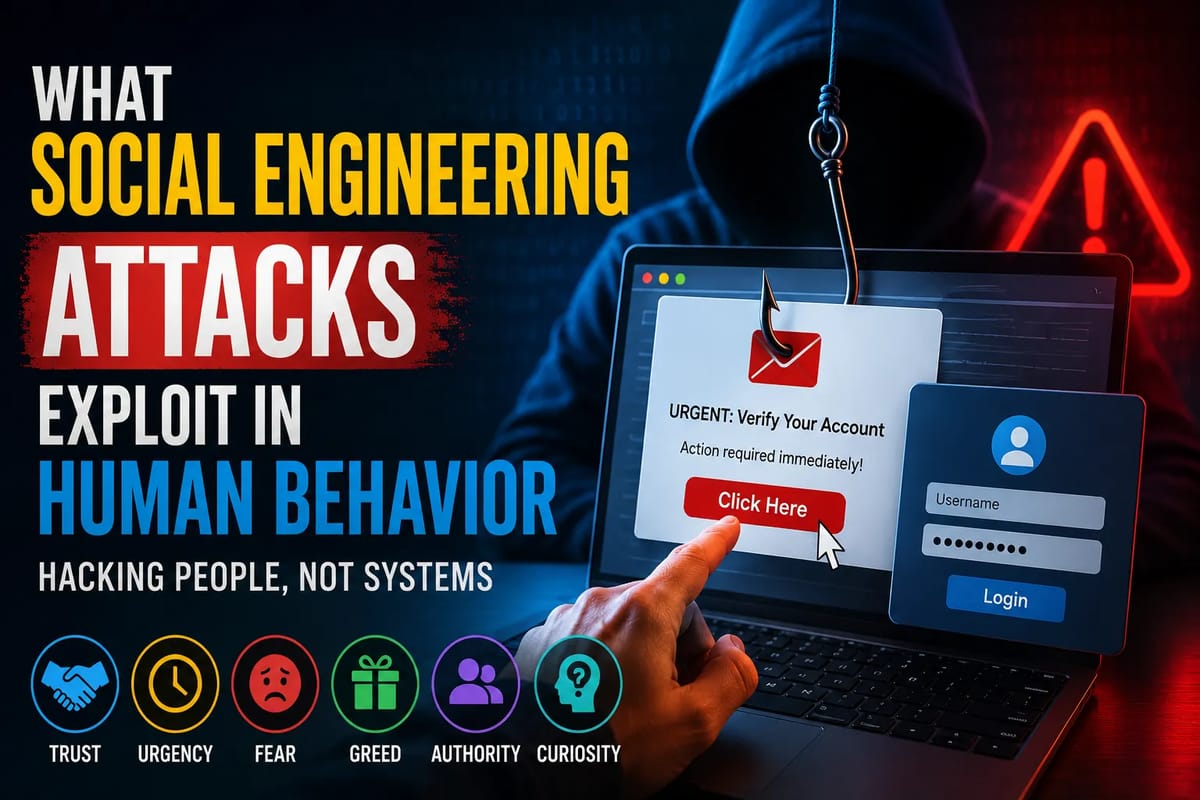
Technology cannot eliminate every cybersecurity risk because employees interact with systems every day.
Cybersecurity awareness programs can teach employees how to recognize and respond to common risks, including:
- Phishing messages
- Suspicious attachments
- Social engineering
- Credential theft
- Unsafe websites
- Unauthorized software
- Physical security risks
- Accidental data exposure
Training should be practical rather than simply requiring employees to complete an annual presentation.
Organizations can reinforce good practices through regular reminders, simulated exercises, clear reporting procedures, and straightforward guidance.
Employees should also know how to report something suspicious without fear of unnecessary punishment. Early reporting can give security teams an opportunity to investigate a potential threat before it becomes a larger incident.
Vulnerability Management Keeps Systems Up to Date
Software vulnerabilities can provide attackers with opportunities to compromise systems.
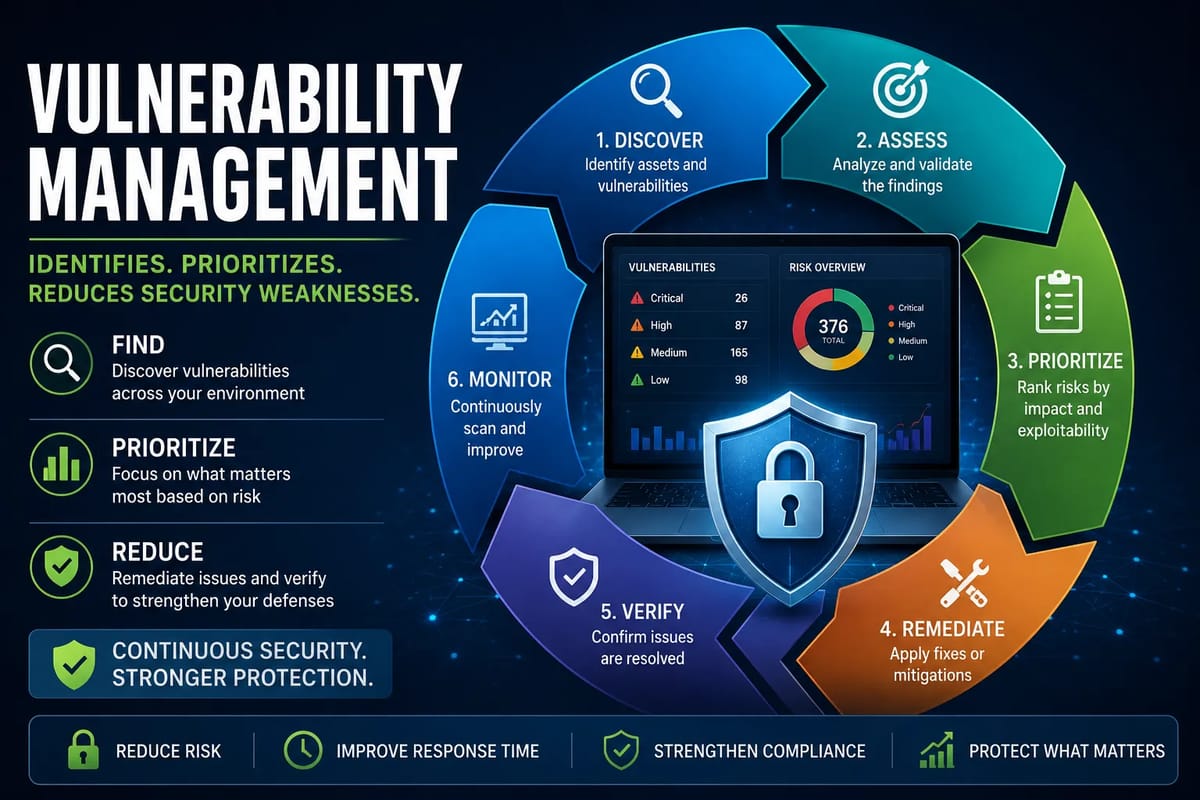
Cybersecurity programs therefore commonly establish vulnerability management processes.
These processes may include:
- Scanning systems for vulnerabilities
- Tracking identified weaknesses
- Prioritizing vulnerabilities
- Applying security updates
- Replacing unsupported software
- Testing patches
- Verifying remediation
Not every vulnerability has the same level of risk. Organizations may prioritize vulnerabilities based on factors such as severity, exploitability, exposure, affected assets, and potential business impact.
Patch management also needs to account for operational requirements. Critical systems may require testing before updates are deployed to production.
Data Protection Is Central to Cybersecurity
Organizations often possess information that could cause significant harm if stolen, altered, exposed, or destroyed.
Data protection strategies can include:
- Encryption
- Access controls
- Data classification
- Secure storage
- Retention policies
- Secure deletion
- Backup procedures
- Data loss prevention
- Monitoring
- Privacy controls
Organizations may classify information according to sensitivity. Public information may require relatively limited protection, while financial records, credentials, customer information, intellectual property, and confidential business documents may require substantially stronger controls.
The objective is to ensure that security protections are appropriate for the value and sensitivity of the information.
Third-Party Risk Must Be Considered
Organizations rarely operate entirely on their own.
They may depend on:
- Cloud providers
- Software vendors
- Payment processors
- Consultants
- Contractors
- Managed service providers
- Hosting companies
- Data processors
- Business partners
These relationships can introduce additional cybersecurity risks.
A vendor may have access to sensitive information, connect to internal systems, or provide software that is essential to business operations.
Third-party risk management can therefore involve evaluating vendors before contracts are signed, defining security requirements, reviewing access permissions, and periodically reassessing important suppliers.
Organizations may also include security obligations in contracts so that vendors understand their responsibilities for protecting information and systems.
Compliance Can Shape Cybersecurity Programs
Many organizations must follow laws, regulations, industry requirements, contractual obligations, or internal standards.
Depending on the organization's activities and location, cybersecurity requirements may relate to areas such as:
- Personal data
- Financial information
- Healthcare information
- Payment processing
- Government information
- Consumer protection
- Critical infrastructure
Compliance and cybersecurity are related, but they are not identical. Meeting a particular compliance requirement does not necessarily eliminate every cybersecurity risk.
A mature organization uses compliance requirements as one component of a broader security strategy.
Organizations Measure Whether Security Is Improving
Cybersecurity programs need measurable objectives.
Metrics can help leadership understand whether security activities are producing useful results.
Examples include:
- Number of unresolved critical vulnerabilities
- Time required to detect incidents
- Time required to respond to incidents
- Percentage of systems covered by security monitoring
- Percentage of employees completing security training
- Multi-factor authentication adoption
- Backup restoration success rates
- Number of security incidents
- Patch deployment times
- Number of privileged accounts
Metrics should be selected carefully. A large number of security alerts, for example, does not necessarily indicate better security.
Useful measurements should help organizations understand exposure, performance, response capabilities, and areas requiring improvement.
Cybersecurity Programs Require Continuous Improvement
Cybersecurity is not a project that can simply be completed and checked off a list.
Technology changes. Employees change roles. New applications are introduced. Businesses move workloads to the cloud. Attack techniques evolve. Vendors change. New vulnerabilities are discovered.
As a result, organizations need to regularly review their security programs.
Continuous improvement can involve:
- Updating policies
- Reviewing access permissions
- Testing incident response plans
- Conducting security assessments
- Evaluating new technologies
- Reviewing security incidents
- Testing backups
- Updating employee training
- Removing obsolete systems
- Reassessing cybersecurity risks
A security program becomes more effective when lessons from incidents, assessments, and operational experience are used to improve future practices.
What a Mature Cybersecurity Program Looks Like
A mature cybersecurity program does not necessarily mean an organization has purchased every available security product.
Instead, maturity is often reflected in how consistently the organization manages cybersecurity.
A mature program typically has:
- Clearly defined security responsibilities
- An accurate understanding of important assets
- Regular risk assessments
- Strong identity and access controls
- Layered technical defenses
- Security monitoring
- Tested incident response procedures
- Reliable backups
- Employee security awareness
- Vulnerability management
- Third-party risk controls
- Appropriate data protection
- Meaningful security metrics
- Regular program reviews
The specific technologies and processes will vary according to the organization's size, industry, resources, and risk profile.
Building Cybersecurity Into Everyday Operations
The strongest cybersecurity programs become part of normal business operations rather than existing as a separate technical function.
Security considerations can be incorporated when organizations hire employees, develop software, purchase technology, select vendors, launch new services, store information, and plan business continuity.
This approach helps organizations identify security risks earlier, when they can often be addressed more efficiently.
Ultimately, building a cybersecurity program is an ongoing process of understanding risk, establishing appropriate safeguards, preparing for incidents, and learning from experience. Organizations that treat cybersecurity as a continuous business responsibility can build defenses that evolve alongside their technology, people, and operational needs.